A good planer turns rough, uneven lumber into flat, consistent stock fast. Whether you need a compact hand tool or a powerful benchtop machine, the right choice depends on the size of your projects, the finish you want, and how much material you remove at a time.
Our roundup of the best wood planers for 2026 focuses on practical performance, ease of setup, cutting capacity, and value so you can choose a model that fits your shop and your workflow.
Best 10 Wood Planers Picks for 2026
Heavy-Duty Benchtop Pick
DEWALT DW735X 13-Inch 2-Speed Thickness Planer

- 15 amp motor with 13-inch capacity
- Three-knife cutter head for longer knife life
- Two feed speeds and chip ejection system
Best For: Users needing a powerful benchtop planer for wider boards
Detail Work Favorite
JORGENSEN Mini Hand Planer for Woodworking

- O1 tool steel blade for efficient cutting
- Ductile iron body for rugged durability
- Compact manual planer for trimming and deburring
Best For: DIYers and woodworkers doing fine detail work
Workshop Power Pick
DEWALT DW735 13-Inch 2-Speed Thickness Planer

- 15 amp motor for wider materials
- Three-knife cutter head with two speeds
- Automatic carriage lock helps reduce snipe
Best For: Shop users wanting a high-capacity thickness planer
Smooth-Finish Choice
WEN PL1326 13-Inch Spiral Thickness Planer
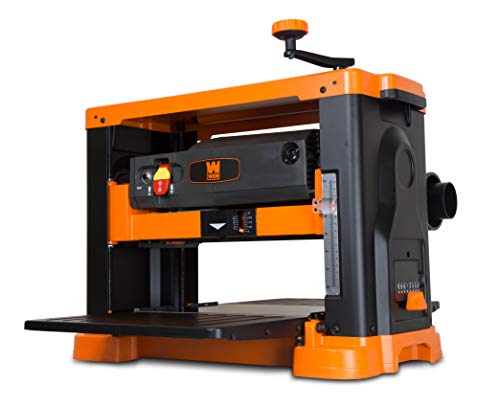
- Spiral cutterhead with 26 rotatable HSS blades
- Up to 13-inch width and 6-inch thickness
- Includes depth stop and adjustable dust port
Best For: Woodworkers who want a smoother finish on boards
Compact Shop Planer
CRAFTSMAN 15-Amp Benchtop Planer

- 15 amp motor for hard and soft wood
- Two-knife solid steel cutter head
- Vacuum port for cleaner dust collection
Best For: DIYers needing a dependable benchtop planer for routine stock removal
Wide-Feed Thickness Planer
VEVOR 13-Inch Two-Speed Planer
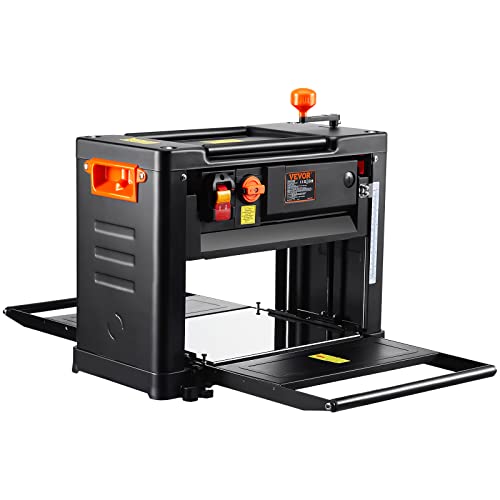
- 13-inch capacity with support for boards up to 6 inches thick
- Two feed speeds for faster cuts or smoother finishes
- Vacuum port and chip ejection for dust control
Best For: Woodworkers wanting a wider planer with flexible feed speeds and long-stock support
Finish-Focused Workshop Planer
DEWALT 12-1/2-Inch 3-Knife Planer

- Three-knife cutter head for 96 cuts per inch
- Four-column carriage lock helps reduce snipe
- Extra-long support tables improve stability
Best For: Woodworkers prioritizing smooth finishes and reduced snipe on hardwoods
High-Capacity Benchtop Option
VEVOR 13" Two-Blade Thickness Planer

- 13-inch worktable for boards up to 6 inches thick
- 35 inches of total support length for longer stock
- Two-knife cutter head and vacuum port for cleaner results
Best For: Woodworkers needing wide-board support and smooth benchtop planing
Foldable Stand Package
VEVOR 13-Inch Benchtop Wood Planer with Stand

- Includes a heavy-duty stand for stability
- Foldable extension plates help save space
- Dust exhaust interface supports cleaner work
Best For: Woodworkers who want a planer with an included stand and compact storage
Precision Feed Control
VEVOR 13-Inch Dual-Roller Thickness Planer

- Dual rollers help stabilize boards during feeding
- 1/8-inch depth steps support repeatable cuts
- Fits 2-inch and 4-inch dust hoses
Best For: Repeatable planing with strong feed control and simple depth adjustment
Heavy-Duty Benchtop Pick – DEWALT DW735X 13-Inch 2-Speed Thickness Planer
If you’re comparing wood planers for regular shop use, the DEWALT DW735X stands out as a 13-inch thickness planer built for larger stock and repeatable results. Its 15 amp, 20,000 rpm motor, three-knife cutter head, and two-speed gearbox are aimed at faster, cleaner passes on wider material.
Best For: Woodworkers who want a powerful benchtop planer for wider boards and consistent thicknessing.
Pros:
- 15 amp motor and 13-inch cutting width handle larger cuts with ease.
- Three-knife cutter head is designed for longer knife life and easier blade changes.
- Two feed speeds let you choose between 96 or 179 cuts per inch.
- Fan-assisted chip ejection helps clear debris during planing.
Cons:
- Large 102-pound machine is not meant for portable jobsite use.
- Benchtop planer takes up substantial space in a small workshop.
This is a strong choice if you want a serious thickness planer with shop-friendly stability, snipe-reducing carriage lock, and included infeed/outfeed tables. It is built more for productive material removal than compact convenience.
Detail Work Favorite – JORGENSEN Mini Hand Planer for Woodworking
Among wood planers, this JORGENSEN mini hand planer is aimed at small-scale shaping, trimming, and finishing tasks rather than heavy stock removal. Its O1 tool steel blade, ductile iron body, and adjustable cutting depth make it a practical hand tool for detail woodworking and crafts.
Best For: DIYers and woodworkers who need a compact hand plane for trimming and fine adjustments.
Pros:
- O1 tool steel blade is made for efficient cutting and repeated sharpening.
- Ductile iron body is built for rugged, heavy-duty use.
- Adjustable cutting depth supports different planing tasks.
- Small size is useful for trimming, deburring, and craft work.
Cons:
- Manual tool is not intended for large boards or fast material removal.
- Small 1.25-inch cutting width limits coverage on wider surfaces.
If you want a portable planer for precision touch-ups, this model fits well in a tool kit or small workspace. It is a simple, task-focused option for shaping edges and refining surfaces by hand.
Workshop Power Pick – DEWALT DW735 13-Inch 2-Speed Thickness Planer
If you need wood planers for recurring shop projects, the DEWALT DW735 is built around a powerful 15 amp motor and a 13-inch capacity for wider stock. Its three-knife cutter head, two-speed gearbox, and fan-assisted chip ejection are designed to make thicknessing smoother and more efficient.
Best For: Shop users who want a high-capacity thickness planer with strong performance features.
Pros:
- 15 amp motor is made for larger cuts in wider materials.
- Three-knife cutter head is designed for longer knife life and faster changes.
- Two feed speeds help optimize cuts per inch.
- Automatic carriage lock helps reduce movement that can cause snipe.
Cons:
- Heavier benchtop machine is less convenient to move frequently.
- Included warranty info is less specific than some competitors.
This planer is a practical fit for a workshop that values capacity and repeatability over portability. The included dust hose adapter and fold-up table design add to its utility for routine thicknessing work.
Smooth-Finish Choice – WEN PL1326 13-Inch Spiral Thickness Planer
The WEN PL1326 is a benchtop thickness planer for woodworkers who want a clean finish from a 13-inch machine. Its spiral cutterhead uses 26 staggered, rotatable HSS blades, and the 15 amp motor is paired with a 26 feet per minute feed rate for steady stock removal.
Best For: Woodworkers who prioritize a smoother planing finish on boards up to 13 inches wide.
Pros:
- Spiral cutterhead with 26 HSS blades is designed for a clean, smooth finish.
- Handles boards up to 6 inches thick and 13 inches wide.
- Onboard material removal gauge helps track cutting depth per pass.
- Includes a depth stop and adjustable dust port.
Cons:
- One-speed design offers less flexibility than dual-speed planers.
- 36.74 kg cast iron unit is not especially portable.
This is a solid option if finish quality matters more than extra speed settings. For a home shop or small workshop, the spiral cutterhead is the standout feature that helps make the results feel more refined.
Compact Shop Planer – CRAFTSMAN 15-Amp Benchtop Planer
If you need a straightforward benchtop option for wood planers, this CRAFTSMAN model is built for hard and soft wood material removal with a 15 amp motor and a 12.25-inch cutting width. Its two-knife solid steel cutter head is designed for smooth operation, while reversible high-carbon steel knives help extend usable life.
Best For: DIYers and small-shop users who want a simple, corded planer for routine flattening and thickness cleanup.
Pros:
- 15 amp motor handles both hard and soft wood material removal
- Two-knife quick-change solid steel cutter head for smooth operation
- Reversible high-carbon steel knives support longer cutting life
- Vacuum port helps keep the workspace cleaner
Cons:
- 12.25-inch cutting width is smaller than some 13-inch competitors
- Cutting depth is limited to 0.13 inches per pass
- Heavier benchtop design may be less convenient to move often
Overall, this is a practical choice if you want a dependable planer with solid dust collection and a proven cutter-head design. It focuses on clean, consistent stock removal rather than extra advanced features.
Wide-Feed Thickness Planer – VEVOR 13-Inch Two-Speed Planer
Among wood planers, this VEVOR benchtop unit stands out for its 13-inch widened worktable and two-speed feed control, giving you flexibility between faster thicknessing and a smoother finish. It supports boards up to 6 inches thick, and the extended infeeding support helps when working with longer stock.
Best For: Users who want a wider benchtop planer with adjustable feed speeds and strong stock support.
Pros:
- 13-inch capacity and up to 6-inch board thickness support
- Two feed speeds let you choose faster removal or smoother finishing
- Three-knife cutter head is designed for consistent performance
- Vacuum port and chip ejection support cleaner dust collection
Cons:
- Larger footprint may take more bench or shop space
- Heavier build is less ideal for frequent moving
- Requires corded power and a 20A over-current protector is built in for safety
This is a strong option if you want a wider portable thickness planer with more control over feed rate. The tradeoff is size, but the table support and two-speed setup make it appealing for serious bench work.
Finish-Focused Workshop Planer – DEWALT 12-1/2-Inch 3-Knife Planer
DEWALT Benchtop Planer, 15-Amp, 12-1/2-Inch, 3-Knife Cutter, 20,000 RPM, Corded (DW734)
Check Price On AmazonThis DEWALT model is one of the most finish-oriented wood planers in the group, with a 15 amp motor, 20,000 rpm speed, and a three-knife cutter head that delivers 96 cuts per inch. It also includes extra-long infeed and outfeed tables plus a four-column carriage lock to help reduce snipe during planing.
Best For: Woodworkers who care most about fine finishes and minimizing snipe on hardwoods.
Pros:
- Three-knife cutter head delivers 96 cuts per inch for a fine finish
- Four-column carriage lock helps reduce snipe
- Extra-long infeed and outfeed tables add material support
- Disposable reversible knives make changes fast and extend knife life
Cons:
- 12.5-inch cutting width is slightly narrower than 13-inch units
- Heavier than lighter benchtop alternatives
- Best results depend on careful setup and feed control
If your priority is a cleaner surface finish rather than maximum width, this planer is a very solid pick. The depth stop, support tables, and snipe-reducing carriage lock make it well suited to repeatable shop work.
High-Capacity Benchtop Option – VEVOR 13" Two-Blade Thickness Planer
If you need wood planers that can handle wider stock and keep boards supported, this VEVOR benchtop model is built for steady material removal on hard or soft wood. Its 13-inch capacity, 6-inch thickness range, and extended infeeding table make it a practical choice for smoothing boards before final assembly.
Best For: Woodworkers who want a 13-inch planer with strong support for longer boards and smooth finishing.
Pros:
- 13-inch widened worktable handles boards up to 6 inches thick.
- 35 inches of total support length helps keep longer stock flatter.
- Two-knife cutter head is designed for smooth, consistent planing.
- Vacuum port supports easier chip collection during use.
Cons:
- At 54 pounds, it is not a lightweight tool to move frequently.
- Single-speed operation leaves less room for fine-tuning feed behavior.
Overall, this planer focuses on width, support, and finish quality, making it a solid fit for users who want a dependable benchtop machine for routine stock prep.
Foldable Stand Package – VEVOR 13-Inch Benchtop Wood Planer with Stand
Among wood planers in this class, this VEVOR model stands out for its included stand, foldable extension plates, and dust exhaust setup. It is designed for repurposing old or worn wood into smoother stock, while the infeed and outfeed tables help keep the workpiece moving steadily through the cut.
Best For: Buyers who want a 13-inch planer with a stand and space-saving setup.
Pros:
- Includes a heavy-duty stand for more stable setup and operation.
- Foldable extension plates and detachable stand save space.
- Automatic feeding design and return rollers improve workpiece handling.
- Dust exhaust interface helps keep the workspace cleaner.
Cons:
- Heavier build at 67 pounds may limit portability.
- Depth range is listed broadly, so setup will matter for precision work.
This is a practical pick if you want a planer package that prioritizes stability, cleanup, and convenience for everyday woodworking tasks.
Precision Feed Control – VEVOR 13-Inch Dual-Roller Thickness Planer
If your priority in wood planers is consistent feeding and repeatable cuts, this VEVOR benchtop machine is built around control. Its dual-roller feed system, 1/8-inch depth adjustments, and dust hose compatibility make it a practical choice for steady shop use on hardwood and softwood alike.
Best For: Users who want predictable feed control and precise depth adjustments for repeated planing jobs.
Pros:
- Dual rollers help reduce vibration and alignment issues.
- 1/8-inch depth control supports repeatable, precise cuts.
- 13-inch width and 6-inch height suit a range of stock sizes.
- Compatible with 2-inch and 4-inch dust hoses for cleaner operation.
Cons:
- Single-speed design offers fewer operating options.
- At 57.8 pounds, it is still a substantial benchtop tool.
For users who value consistent board tracking and straightforward precision, this planer offers a focused set of features that support smooth, repeatable results.
How We Picked the Best Wood Planers
We focused on the features that matter most in real woodworking: cut quality, motor strength, planer width and capacity, cutter-head design, feed speed options, and dust management. For benchtop models, we also looked at portability, table support, and how well the machine should handle common shop tasks like flattening boards, sizing rough lumber, and cleaning up glued panels.
Because Wood Planers vary widely, we included options for both precision work and heavier material removal, plus at least one compact hand planer for trim and small-scale jobs.
Quick Comparison
In general, larger 13-inch benchtop planers are better for wider boards and batch work, while compact hand planers are better for touch-ups, edge fitting, and small projects. Spiral or multi-knife cutter heads usually leave a cleaner finish, while two-knife designs can be simpler and more budget-friendly. If your shop sees frequent hardwood use or rough-sawn stock, prioritize stronger motors and stable infeed/outfeed support.
Key Buying Factors for Wood Planers
Cutting Width and Capacity
Check the maximum board width and thickness the planer can handle. A 13-inch machine gives more flexibility for furniture and cabinetry work than smaller benchtop units, while compact hand tools are best for localized shaping rather than full-board flattening.
Cutter Head Type
Multi-knife and spiral cutter heads can improve surface quality and reduce tear-out. Two-knife systems may still be perfectly adequate for general use, especially if you care more about affordability than a glass-smooth finish.
Motor Power and Feed Speed
A stronger motor helps maintain consistent cuts in dense hardwoods and when removing more material per pass. Variable or two-speed feed settings can be useful when balancing surface quality against productivity.
Dust Collection and Table Support
Planers create a lot of chips. Good dust extraction keeps the machine running efficiently and the workspace cleaner. Stable infeed and outfeed tables also help prevent snipe and improve consistency on longer boards.
Who Should Buy Which Wood Planers?
Choose a larger benchtop planer if you regularly dimension rough lumber, build furniture, or process multiple boards in a session. Pick a compact or lighter-duty model if you have limited shop space, occasional project needs, or want a more affordable entry point. A hand planer makes the most sense for fine adjustments, edge fitting, and detail work rather than full stock reduction.
If you want the best all-around balance, look for Wood Planers with enough width for your typical projects, a cutter head that matches your finish expectations, and a motor strong enough for the wood species you use most often.