Compacted soil can limit water, air, and nutrients around grass roots, leaving a lawn thin even when mowing and watering are consistent. Plug aerators remove small soil cores to create channels that help the root zone recover.
These 10 best plug lawn aerators include tow-behind machines for larger lawns and manual coring tools for targeted work. Use the guide below to match the aerator style, tine design, depth, and capacity to your yard.
Best 10 Plug Lawn Aerators Picks for 2026
Best Heavy-Duty Tow-Behind
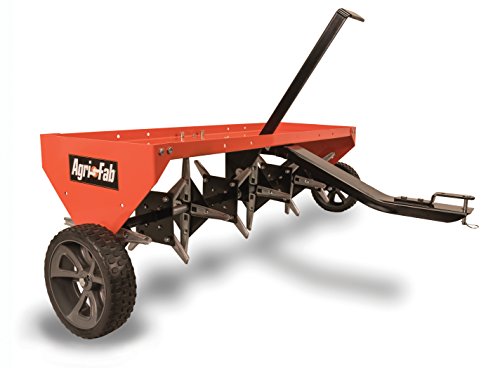
- 32 galvanized self-sharpening knives
- Pulls plugs up to 3 inches deep
- 175-pound weight tray capacity
Best For: Large lawns maintained with a lawn or garden tractor
Best Manual Core Tool
Non-Clogging Hollow-Tine Aerator
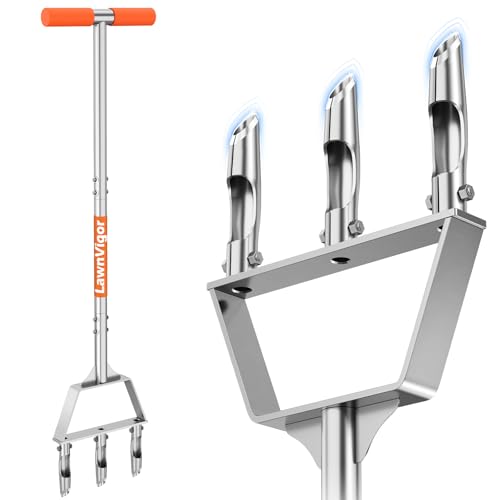
- Three hollow tines remove soil plugs
- Replaceable tines for easier maintenance
- Wide foot pedal and ergonomic handle
Best For: Small lawns and compacted or clay soil
Best Maximum-Penetration Tow-Behind

- 330-pound heavy-duty weight tray
- 32 galvanized tines reach about 3 inches
- Universal hitch for tractor, ATV, or UTV
Best For: Large or clay-rich areas needing extra ground penetration
Best Rolling Manual Design
Patented Mobile Lawn Coring Tool

- Rotary coring design extracts soil plugs
- Wheels improve manual mobility
- Reinforced dual push rods for regular use
Best For: Small to medium lawns needing a movable manual aerator
Best Rolling Core Aerator

- Seven hollow stainless-steel tines remove soil plugs
- Rolling design supports easier lawn coverage
- Heavy-duty steel with replaceable tines
Best For: Larger lawns and repeated aeration on compacted soil
Best for Clay Soil

- Aerates up to 4 inches deep
- Three hollow tines eject plugs to resist clogging
- Wide footplate and upright ergonomic handle
Best For: Compacted clay soil and targeted deep aeration
Best Versatile Option

- Includes interchangeable spike and plug heads
- Adjustable handle supports more comfortable use
- Powder-coated steel construction for outdoor durability
Best For: Lawns needing both spike loosening and plug aeration
Heavy-Duty Pick
Stainless Steel 4-Tine Core Aerator
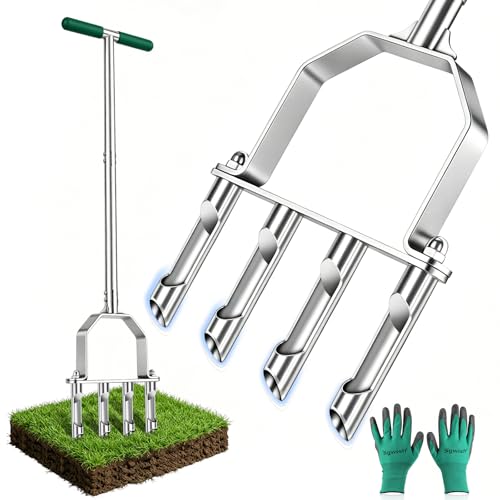
- Rust-resistant stainless steel construction
- Four hollow tines for efficient aeration
- Auto-eject design with adjustable padded handle
Best For: Durable manual lawn aeration with less clog clearing
Clean-Up Pick
Jardineer Core Aerator with Soil Tray

- Built-in tray collects ejected soil plugs
- Four-inch tines reach deeper into compacted soil
- Wide non-slip pedal improves step-in leverage
Best For: Deeper aeration with tidier soil-plug collection
Convenience Pick
Dolibest Stainless Steel Coring Aerator

- SUS 304 stainless steel plugs and tray
- Automatic soil-core collection reduces cleanup
- Includes a 12-inch cleaning and weeding tool
Best For: Low-maintenance manual aeration with useful extras
Best Heavy-Duty Tow-Behind – 48-Inch Agri-Fab Plug Aerator
Agri-Fab 48 In Tow Behind Lawn Plug Aerator with 32 Galvanized Knives and Universal Hitch
Check Price On AmazonIf you need plug lawn aerators for larger turf areas, the Agri-Fab 48-inch model is designed for tractor-assisted coverage and deep soil penetration. Its 32 galvanized knives pull plugs up to 3 inches deep, while the weight tray lets you add up to 175 pounds for tougher soil.
Best For: Homeowners with larger lawns who want a tow-behind aerator with adjustable penetration and a universal tractor hitch.
Pros:
- Pulls plugs up to 3 inches deep to improve airflow, water absorption, and nutrient penetration.
- Wide 48-inch working path helps cover more lawn with each pass.
- 32 galvanized, self-sharpening knives are designed for repeated lawn maintenance.
- Flat-free tires and a cantilever transport handle support convenient operation from the tractor seat.
Cons:
- Requires a lawn or garden tractor for towing.
- The 94-pound unit is relatively substantial to store and handle.
- Its weight tray capacity is lower than some competing heavy-duty models.
This Agri-Fab is a practical choice when broad coverage, deep coring, and tractor compatibility matter more than portability. The universal hitch and controllable transport handle add convenience for regular seasonal aeration.
Best Manual Core Tool – Non-Clogging Hollow-Tine Aerator
For small areas or spot treatment, this manual option is one of the more accessible plug lawn aerators. Its three hollow tines remove soil plugs, and the wide foot pedal and ergonomic handle help you apply downward force without relying on a tractor.
Best For: Small lawns and gardeners who want a manually operated core aerator for compacted or clay soil.
Pros:
- Three hollow tines remove soil plugs and are designed to resist clogging.
- Replaceable tines support long-term maintenance.
- Wide foot pedal and non-slip ergonomic handle improve control and comfort.
- Heat-treated tines and a bend-resistant steel frame are built for demanding use.
Cons:
- Manual operation is more labor-intensive than using a tow-behind aerator.
- Dry soil should be watered before use.
- The tool should not be rocked, twisted, or pried side-to-side in the ground.
This is a focused, budget-friendly style of plug aerator for users willing to work in smaller sections. Its replaceable hollow tines and non-clogging design are useful advantages, provided the soil is prepared and the tool is used as directed.
Best Maximum-Penetration Tow-Behind – Garvee 48-Inch Plug Aerator
The Garvee is a strong candidate among plug lawn aerators for broad lawns and dense ground. It combines a 48-inch aerating path with 32 galvanized plug tines that reach about 3 inches deep, while its tray supports up to 330 pounds for added penetration.
Best For: Large lawns, farms, and planting areas where extra loading capacity and tractor, ATV, or UTV towing are useful.
Pros:
- 48-inch working width helps aerate large areas efficiently.
- 32 galvanized steel plug tines reach approximately 3 inches deep.
- Heavy-duty tray holds up to 330 pounds for dense or clay-rich soil.
- Universal hitch and 12-inch pneumatic tires support towing and smoother rolling under load.
Cons:
- Requires a compatible towing vehicle for operation.
- Adding substantial tray weight can make transport and storage more demanding.
- Pneumatic tires may require more upkeep than flat-free tires.
Choose this Garvee model if penetration capacity is a priority. Its unusually large weight tray and pneumatic tire setup make it suited to heavier-duty aeration, especially where compacted or clay-rich soil challenges lighter equipment.
Best Rolling Manual Design – Patented Mobile Lawn Coring Tool
This rolling manual model offers a middle ground between a handheld core tool and a tow-behind machine. Among plug lawn aerators, its rotary coring design and mobile wheels make it a practical option for small to medium lawns where you want manual control without repeatedly lifting a stationary tool.
Best For: Small to medium lawns where a rolling manual aerator can provide controlled plug removal and easier movement between passes.
Pros:
- Rotary coring design punches holes and extracts soil plugs.
- Wheeled manual operation helps move the tool across the lawn.
- Reinforced dual push rods and heavy-duty construction support regular use.
- Designed to improve air, water, and nutrient absorption while encouraging deeper roots.
Cons:
- Manual pushing still requires physical effort and provides a workout.
- It is intended for small to medium lawns rather than large-scale towing.
- Its 43.7-pound weight may make storage and lifting less convenient.
The rolling format makes this a useful choice for homeowners who want a manual plug aerator with more mobility than a traditional step-on tool. It is best suited to manageable lawn areas where controlled, repeated passes are practical.
Best Rolling Core Aerator – Landzie Rolling Lawn Aerator
If you want plug lawn aerators for covering more ground with less repeated lifting, the Landzie rolling aerator is a practical manual option. Its seven hollow stainless-steel tines remove soil cores as the 38.8-pound roller moves across the lawn, helping air, water, and nutrients reach deeper roots.
Best For: Homeowners who want a rolling plug aerator for compacted silt, sandy, or loamy soil and prefer a durable, maneuverable design.
Pros:
- Seven hollow tines remove soil plugs for true core aeration.
- Rolling design helps reduce the effort needed compared with stationary manual tools.
- Powder-coated heavy-duty steel offers durability and rust resistance.
- Replaceable, non-clogging tines can extend the tool’s service life.
Cons:
- At roughly 38.8 pounds, it may be more cumbersome to transport than lighter hand tools.
- Its rolling format may be less convenient for very small, confined areas.
The Landzie stands out when you want a sturdy rolling core aerator that balances penetration with easier forward-and-back movement. Replaceable tines and the lifetime guarantee add useful long-term value.
Best for Clay Soil – Deep-Core Manual Lawn Aerator
Among plug lawn aerators for dense ground, this yellow manual core aerator is designed to reach up to 4 inches deep. Its three heat-treated hollow tines eject plugs automatically, while the wide footplate helps transfer body weight into compacted clay or hard soil.
Best For: Homeowners aerating compacted clay soil who want deep penetration, an upright working position, and replaceable tines.
Pros:
- Reaches up to 4 inches for deep core aeration.
- Non-clogging hollow tines automatically eject soil plugs.
- Wide footplate and reinforced steel frame support forceful use.
- 37-inch height and rubber grips help reduce bending and hand fatigue.
Cons:
- With three tines, each step covers less area than a rolling aerator.
- Dry soil should be watered before use for better penetration.
- The lightweight 3.54-pound build may provide less inherent downward weight.
This tool is a strong fit for targeted, deep aeration rather than fast coverage. Its upright design and replaceable, clog-resistant tines make it especially practical for difficult clay when the soil is properly prepared.
Best Versatile Option – 2-in-1 Lawn Aerator Tool
For homeowners comparing plug lawn aerators with more flexible tools, this manual model includes both spike and plug heads. Use the spike head for loosening soil, then switch to the coring head when you need to remove soil cores and improve deeper airflow and water penetration.
Best For: Mixed lawn-care tasks where one adjustable manual tool needs to handle both spike loosening and plug aeration.
Pros:
- Interchangeable spike and plug heads cover two aeration approaches.
- Adjustable handle helps accommodate different user heights.
- Sturdy footplate improves downward force and balance.
- Powder-coated steel construction is designed for repeated outdoor use.
Cons:
- Changing heads adds a step compared with a dedicated plug aerator.
- Manual operation requires stepping repeatedly on the footplate.
- Hard or dry soil should be watered one to two days before use.
The 2-in-1 format is its main advantage: it lets you choose between surface loosening and core removal as lawn conditions change. It is a practical choice when storage space or budget favors one multipurpose tool.
Heavy-Duty Pick – Stainless Steel 4-Tine Core Aerator
If you want plug lawn aerators that prioritize durable construction and efficient soil-core removal, this manual model is a strong option. Its four hollow tines create multiple holes per step, while the auto-eject design helps reduce bending and interruptions during use.
Best For: Homeowners who want a rust-resistant, adjustable manual aerator for compacted soil and routine lawn care.
Pros:
- High-density stainless steel construction resists rust, bending, cracking, and paint peeling.
- Four hollow tines aerate more efficiently than smaller tine designs.
- Auto-ejecting tines help release soil cores without frequent manual clearing.
- Adjustable T-handle and padded grip support more comfortable operation.
Cons:
- Requires watering the lawn one to two days before use for easier penetration.
- Manual operation still requires repeated stepping and pushing across the lawn.
- Screws should be tightened securely during assembly to minimize shaking.
This is a practical choice when longevity and straightforward core removal matter most. The four-tine layout and ergonomic adjustability make it well suited to regular yard maintenance, provided the soil is prepared first.
Clean-Up Pick – Jardineer Core Aerator with Soil Tray
Among plug lawn aerators, the Jardineer stands out for collecting soil cores as they eject. Its four-inch coring tubes reach deeper into compacted soil, and the wide foot pedal provides leverage for a more stable step-in motion.
Best For: Gardeners who want deeper aeration with automatic plug collection and easier post-aeration cleanup.
Pros:
- Built-in tray catches ejected soil plugs to help keep the lawn tidy.
- Four-inch coring tubes create deeper channels for air, water, and nutrients.
- High-strength carbon steel frame is designed for demanding yard work.
- Wide non-slip foot pedal, T-handle, and rubber grips improve stability and comfort.
Cons:
- At 6.16 pounds, it is relatively substantial for a manual lawn tool.
- Requires assembly, although the supplied instructions and hardware are designed for quick setup.
- Manual coring still involves physical effort over larger lawns.
The collection tray is the main advantage for anyone who dislikes scattered plugs and secondary cleanup. Its deeper tines and broad pedal also make it a sensible choice for compacted soil, especially when used with garden boots for added leverage.
Convenience Pick – Dolibest Stainless Steel Coring Aerator
This Dolibest model is one of the plug lawn aerators to consider when you want stainless steel coring parts and a built-in storage tray. It arrives pre-assembled and includes a hand tool for cleaning the tines, weeding, or transplanting seedlings.
Best For: Home gardeners seeking a corrosion-resistant manual aerator with plug storage and a useful cleanup accessory.
Pros:
- SUS 304 stainless steel coring plugs resist rust and deformation.
- Stainless steel storage tray automatically collects ejected soil cores.
- Soft rubber grip and elevated crossbar help improve comfort and foot clearance.
- Included 12-inch hand tool supports tine cleaning, weeding, and transplanting.
Cons:
- Assembly is still required, despite the product being described as pre-assembled.
- Manual operation may be tiring when covering a large lawn.
- Its 2.81-kilogram weight may feel substantial during extended use.
Dolibest offers a well-rounded setup for gardeners who value rust resistance and reduced cleanup. The tray keeps cores contained, while the included hand tool adds practical utility beyond aeration.
How We Picked These Plug Lawn Aerators
We focused on core aerators that remove plugs rather than simply puncturing the surface. The selection covers tow-behind models with broad working widths, manual rolling tools, and step-in designs for smaller or more difficult areas. We considered tine construction, claimed working depth, clog resistance, frame durability, maneuverability, storage, and the amount of physical effort required.
Because soil type and lawn size vary significantly, no single model is ideal for every yard. Tow-behind units generally cover ground faster, while manual aerators offer better control around beds, trees, gates, and narrow sections.
Quick Comparison
| Best For | Recommended Style | What to Look For |
|---|---|---|
| Large open lawns | Tow-behind aerator | Wide deck, durable coring knives, hitch compatibility, and weight capacity |
| Small lawns and spot repairs | Step-in manual aerator | Wide foot plate, comfortable handle, hollow non-clogging tines |
| Medium lawns | Rolling manual aerator | Wheels, stable frame, soil-core release, and manageable operating weight |
| Mixed soil or seasonal use | Adjustable or replaceable-tine model | Interchangeable heads, reinforced construction, and accessible replacement parts |
Key Buying Factors for Plug Lawn Aerators
Working Width and Lawn Size
A 48-inch tow-behind aerator can reduce passes across a large lawn, but it needs sufficient towing power and turning space. Manual tools are slower yet easier to control in tight areas.
Tine Design and Depth
Hollow tines should remove recognizable plugs instead of merely making holes. A claimed depth near 3 to 4 inches is useful when conditions allow, although very dry, rocky, or heavily compacted soil may reduce actual penetration.
Construction and Maintenance
Look for steel frames, corrosion-resistant or galvanized components, reinforced push rods, and replaceable tines. After use, clear soil from the tubes and rinse or dry metal parts to help prevent rust and clogging.
Weight, Tires, and Handling
Extra weight can improve penetration on tow-behind models, while a wide foot plate makes manual units easier to press into the ground. Pneumatic tires improve movement over uneven lawns but may require occasional inflation.
Who Should Buy Which Plug Lawn Aerators?
Choose a tow-behind model if you maintain a broad, open lawn and already own a compatible riding mower or garden tractor. Pick a step-in core aerator for small yards, isolated compacted patches, or homeowners who want a simple tool with no assembly beyond setup. A rolling manual model is a practical middle ground for medium-sized lawns because it reduces repeated lifting and lets you steer around obstacles.
If your lawn has clay soil, prioritize hollow, non-clogging tines and a sturdy frame. For occasional maintenance, a simpler manual tool may offer better value; for repeated seasonal aeration, favor replaceable parts, stronger construction, and a design that minimizes operator fatigue.