Compacted soil can prevent air, water, and nutrients from reaching grass roots, leaving a lawn thin, stressed, and difficult to maintain. The right aerator opens the soil with either solid spikes or hollow cores, helping turf recover more effectively.
We selected 10 lawn aerators across manual, rolling, tow-behind, core, spike, and shoe-style designs. Use the guide below to match the tool’s aeration method, coverage, adjustability, and effort level to your yard.
Best 10 Lawn Aerators Picks for 2026
Best Manual Spike Aerator for Small Lawns
Walensee 15-Spike Lawn Aerator

- 15 iron spikes provide coverage for spot aeration
- Long handle, foot pedal, and cushioned grip improve leverage
- Detachable design simplifies storage
Best For: Small lawns, edges, narrow spaces, and lightly compacted patches
Best Tow-Behind Plug Aerator for Large Lawns
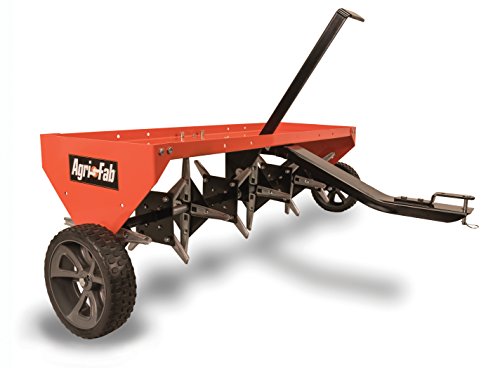
- Pulls plugs up to 3 inches deep
- 32 galvanized knives and a 175-pound weight tray
- Universal hitch fits most lawn and garden tractors
Best For: Large lawns maintained with a tractor
Best Manual Core Aerator for Clay Soil
Heavy-Duty 4-Inch Lawn Aerator

- Three hollow tines reach up to 4 inches deep
- Non-clogging and replaceable tine design
- Wide foot pedal and upright 37-inch build
Best For: Compacted clay soil and deep manual core aeration
Best Heavy-Duty Spike Tow-Behind Aerator

- 12 steel star-shaped discs penetrate up to 2 inches
- Weight tray supports up to 280 pounds
- Universal hitch works with tractors, UTVs, and ATVs
Best For: Large lawns, gardens, and farm areas needing broad spike aeration
Best Automatic-Release Spike Aerator
Adjustable Manual Lawn Aerator

- Dual-layer spring helps release soil and leaves
- 15 iron spikes support even aeration
- 32–35-inch adjustable height
Best For: Manual lawn care with easier debris release
Best Rolling Core Aerator

- Rotary design extracts soil plugs
- Wheels support mobile operation
- 43.7-pound heavy-duty construction
Best For: Small to medium lawns with compacted soil
Best Deep-Penetrating Spike Aerator
Adjustable 16-Spike Lawn Aerator

- 16 sharp spikes extend 3.5 inches
- External spring helps prevent clogging
- 35–40-inch adjustable ergonomic height
Best For: Deeper manual aeration across varied soil types
Heavy-Duty Rolling Pick
VEVOR 18-Inch Spike Lawn Aerator

- Solid spikes penetrate hard soil and resist mud clogging.
- Supports up to 40 pounds of added weight.
- Four wheels improve control over uneven terrain.
Best For: Broad lawn coverage and compacted soil
Comfort-Focused Core Pick
Adjustable Knee-Friendly Lawn Aerator
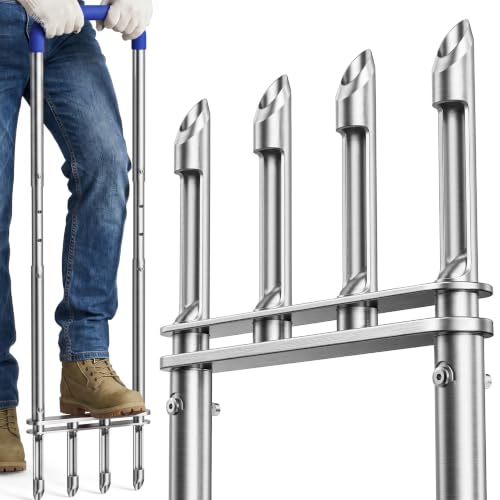
- Adjustable height supports a more comfortable upright position.
- Four hollow tines remove soil cores with each step.
- Flow-through tine design helps reduce cleaning interruptions.
Best For: Small lawns and targeted core aeration
Wearable Aeration Pick
Briliantwerk Lawn Aerator Shoes

- Adjustable straps fit US sizes 5 through 14.
- Includes 2-inch and 1.5-inch spike options.
- Suitable for lawns, dethatching, and epoxy flooring.
Best For: Hands-free DIY lawn and flooring projects
Best Manual Spike Aerator for Small Lawns – Walensee 15-Spike Lawn Aerator
If you need a straightforward option for spot work and routine maintenance, the Walensee is a practical lawn aerator for small areas. Its 15 iron spikes create channels for air, water, and nutrients, while the foot pedal and cushioned T-handle provide leverage without the balancing issues associated with aerator shoes.
Best For: Small lawns, lawn edges, narrow spaces, bare spots, and lightly compacted soil.
Pros:
- Fifteen 2.8-inch spikes provide useful coverage with each step.
- 34.6-inch handle helps reduce bending during use.
- Detachable design makes assembly, carrying, and storage easier.
- More stable to use than spiked shoes that require straps and careful balance.
Cons:
- Not recommended for large-scale aeration jobs.
- May be unsuitable for heavy sticky clay or rocky ground.
- Dry or hard soil should be watered first.
This Walensee lawn aerator is a sensible choice when you want manual control and targeted coverage rather than a tow-behind machine. It is best suited to manageable areas and regular upkeep.
Best Tow-Behind Plug Aerator for Large Lawns – Agri-Fab 48-Inch Lawn Aerator
Agri-Fab 48 In Tow Behind Lawn Plug Aerator with 32 Galvanized Knives and Universal Hitch
Check Price On AmazonThe Agri-Fab is a heavy-duty lawn aerator designed to cover larger areas behind a lawn or garden tractor. Its 32 galvanized knives pull plugs up to 3 inches deep, and the 175-pound weight tray lets you add pressure when soil penetration requires it.
Best For: Large lawns and property owners using a lawn or garden tractor.
Pros:
- Pulls soil plugs up to 3 inches deep to improve airflow and water absorption.
- Thirty-two galvanized, self-sharpening knives are built for repeated use.
- Weight tray supports up to 175 pounds for increased penetration.
- Universal hitch fits most lawn and garden tractors.
Cons:
- At 94 pounds, it is substantially heavier than a handheld aerator.
- Requires a compatible tractor for operation.
- Its 48-inch working width may be excessive for small yards.
Choose this Agri-Fab when deep plug aeration and efficient coverage matter more than compact storage or manual portability. Flat-free tires and the cantilever transport handle also make moving between work areas more convenient.
Best Manual Core Aerator for Clay Soil – Heavy-Duty 4-Inch Lawn Aerator
For compacted or clay soil, this manual lawn aerator uses three hollow tines to remove cores up to 4 inches deep. Its steel frame, wide foot pedal, and 37-inch upright design are intended to help you apply body weight while limiting bending during demanding aeration work.
Best For: Homeowners working on compacted clay soil who want deep, manual core aeration.
Pros:
- Hollow tines reach up to 4 inches for deep core aeration.
- Non-clogging, replaceable tines automatically eject soil plugs.
- Reinforced welded-steel frame and wide footplate support heavy use.
- Non-slip rubber grips and upright height help reduce hand and back fatigue.
Cons:
- Three tines cover less ground per step than multi-spike tools.
- Dry soil should be watered before use.
- Requires manual effort and should not be rocked or twisted during use.
This tool stands out when depth and replaceable hollow tines are priorities. It is a focused solution for difficult compacted areas, though a wider tow-behind aerator will be faster for extensive lawns.
Best Heavy-Duty Spike Tow-Behind Aerator – 48-Inch Orange Spike Aerator
This 48-inch tow-behind lawn aerator is built for broad coverage across lawns, gardens, and farm areas. Twelve star-shaped steel spike discs penetrate up to 2 inches, while the reinforced tray can hold up to 280 pounds to increase downward pressure on compacted ground.
Best For: Large lawns, gardens, and farm areas maintained with a lawn tractor, UTV, or ATV.
Pros:
- Wide 48-inch design helps cover larger areas efficiently.
- Star-shaped steel discs penetrate up to 2 inches.
- 280-pound weight tray provides substantial added pressure.
- Universal hitch connects to most lawn tractors, UTVs, and ATVs.
Cons:
- Requires a towing vehicle and suitable hitch.
- Spike aeration does not remove soil plugs like a core aerator.
- Its broad, heavy-duty design may be unnecessary for small yards.
The Orange Spike Aerator is a strong fit when you need wide coverage and adjustable weight for routine compaction relief. Its transport-and-working-mode lever also makes it easier to lift the spikes while moving between areas.
Best Automatic-Release Spike Aerator – Adjustable Manual Lawn Aerator
This manual lawn aerator is designed for routine yard care when you want to loosen soil while minimizing the need to clear dried leaves and soil by hand. Its 15 iron spikes, dual-spring design, and adjustable height make it a practical option for improving lawn ventilation with a straightforward push-and-step process.
Best For: Homeowners who want an adjustable spike aerator with automatic debris release for small to medium lawn-care jobs.
Pros:
- Dual-layer spring design helps remove soil and dried leaves after aeration.
- Fifteen 1.74-inch iron spikes provide uniform soil penetration.
- Adjustable height from 32 to 35 inches can improve comfort for different users.
- Thickened, rust-resistant iron construction is built for regular use.
Cons:
- It is a manual tool, so aerating a larger lawn requires physical effort.
- Its 1.74-inch spikes may offer less penetration than some deeper-spike designs.
- Assembly requires screws, washers, and a small wrench.
The automatic-release design is the main differentiator here, especially if clogged spikes and post-aeration cleanup are common frustrations. Choose it for convenient manual maintenance rather than high-volume lawn aeration.
Best Rolling Core Aerator – Manual Rolling Lawn Aerator
This rolling lawn aerator uses a rotary coring design to pull soil plugs from compacted ground rather than simply puncturing the surface. Its mobile-wheel format and balanced 43.7-pound build make it suited to gardeners who want a more thorough manual lawn aeration method for small to medium areas.
Best For: Users seeking a manual core aerator that extracts soil plugs to improve air, water, and nutrient access.
Pros:
- Pulls soil plugs to help relieve compaction and improve absorption.
- Rolling design with transport wheels supports mobile operation.
- Reinforced dual push rods and heavy-duty construction are intended for regular use.
- Balanced weight design can make plug pulling efficient on small to medium lawns.
Cons:
- At 43.7 pounds, it is considerably heavier than a simple spike aerator.
- Manual operation can be physically demanding and provides a workout.
- The coring approach may be more effort than needed for light surface loosening.
For compacted soil, removing plugs generally offers a more intensive aeration approach than making shallow holes. Its weight and manual push operation are worth considering before choosing it for larger lawns or users who prefer a lighter tool.
Best Deep-Penetrating Spike Aerator – Adjustable 16-Spike Lawn Aerator
This adjustable lawn aerator combines 16 sharp, 3.5-inch metal spikes with a wide foot plate for deeper manual penetration. The external rebound spring helps return the spike head and shake off debris, while the T-handle and 35-to-40-inch height range are designed to make repeated use more comfortable.
Best For: Homeowners who want deeper spike penetration, broad foot placement, and adjustable height for compacted clay, sandy, or loamy soil.
Pros:
- Sixteen 3.5-inch spikes in a 4×4 pattern cover ground efficiently.
- External rebound spring helps prevent clogging between steps.
- Adjustable 35-to-40-inch height can reduce bending and back strain.
- Powder-coated iron construction is designed for durability and rust resistance.
Cons:
- It is a manual spike tool and still requires repeated stepping and pushing.
- Hard soil may need watering one to two days before aeration.
- Spike aeration does not remove soil plugs like a coring aerator.
The combination of deeper spikes, a wide foot plate, and a rebound spring makes this a strong choice for users prioritizing efficient penetration and reduced clogging. For best results, prepare especially hard soil before using it.
Heavy-Duty Rolling Pick – VEVOR 18-Inch Spike Lawn Aerator
For gardeners who want broad coverage without fuel or electricity, this rolling lawn aerator uses upgraded solid spikes to create pathways for air, water, and fertilizer. Its four-wheel design and reinforced iron shaft support up to 40 pounds of added weight for compacted soil.
Best For: Larger lawn areas, hard soil, uneven terrain, and users who prefer a push-style lawn aerator.
Pros:
- Solid spikes are designed to penetrate hard soil without frequent mud clogging.
- Reinforced construction supports up to 40 pounds of added weight.
- Four-inch wheels and an ergonomic V-shaped handle help it roll smoothly.
- Manual operation requires no fuel, electricity, or complicated maintenance.
Cons:
- At 20.2 pounds, it is heavier than smaller handheld aerators.
- It requires pushing or pulling across the lawn.
This VEVOR model is a practical choice when you need consistent rolling coverage and the option to add weight for especially firm ground. Its pre-assembled spike section also helps simplify setup.
Comfort-Focused Core Pick – Adjustable Knee-Friendly Lawn Aerator
This manual lawn aerator is designed for controlled, upright work rather than rolling coverage. Its adjustable handle, dual foot platform, and four hollow tines help extract soil cores from compacted areas while directing air, water, and nutrients toward grass roots.
Best For: Small lawns, lawn edges, narrow strips, and isolated compacted spots where core aeration is needed.
Pros:
- Handle adjusts from 43.3 to 48.5 inches for a more comfortable stance.
- Dual foot platform helps apply even pressure to all four tines.
- Hollow tines remove soil cores to open pathways beneath turf.
- Flow-through tubes help eject soil and reduce frequent cleaning.
Cons:
- Its manual, step-by-step design is less suited to covering large lawns quickly.
- It removes four small cores per step, so repeated stepping is required.
With a lightweight 5.5-pound construction and adjustable height, this aerator favors precision and user comfort. It is especially useful when only selected portions of a lawn need deeper core aeration.
Wearable Aeration Pick – Briliantwerk Lawn Aerator Shoes
These lawn aerator shoes offer a hands-free approach to lawn aeration and dethatching. Adjustable straps fit US sizes 5 through 14, while interchangeable 2-inch and 1.5-inch spikes support different lawn-care and screeding tasks.
Best For: DIY users who want wearable spike shoes for lawn aeration, dethatching, or epoxy flooring work.
Pros:
- Adjustable hook-and-loop straps accommodate sizes US 5 through 14.
- Includes 2-inch spikes for lawn aeration and 1.5-inch spikes for screeding.
- Strong metal nuts are designed to keep the spikes securely tightened.
- Can also be used for epoxy flooring installation projects.
Cons:
- Spikes and metal nuts must be tightened firmly before use.
- Walking in aerator shoes requires balance and controlled movement.
- Wearable shoes may offer less targeted control than a handheld tool.
This is a versatile option for users comfortable walking across the lawn in spike shoes. The two spike lengths expand its usefulness beyond routine lawn aeration, but careful fitting and tightening are important before starting.
How We Picked the Best Lawn Aerators
We compared these Lawn Aerators by aeration method, working width, penetration potential, construction, adjustability, ease of use, and the type of lawn each design suits best. The lineup includes compact manual tools for small areas, rolling models for more efficient coverage, tow-behind units for riding mowers or tractors, and shoes for occasional spot treatment.
Core aerators remove plugs of soil, making them especially useful for serious compaction and clay. Spike aerators puncture the surface without removing soil and are generally simpler, faster to use, and easier to maintain. Product claims such as maximum depth, replaceable tines, added weight capacity, hitch compatibility, and ergonomic handles were also considered where listed.
Quick Comparison
| Best For | Recommended Style | Why It Works |
|---|---|---|
| Small yards and garden sections | Manual spike or core tool | Precise control without storage-heavy equipment |
| Dense or clay soil | Hollow-tine core aerator | Removes plugs instead of simply puncturing the surface |
| Large lawns | Tow-behind aerator | Covers more ground with a riding mower or tractor |
| Routine light aeration | Rolling spike aerator | Moves efficiently while requiring less lifting |
| Low-cost spot treatment | Aerator shoes | Compact and easy to store |
Key Buying Factors for Lawn Aerators
Core Versus Spike Aeration
Choose hollow tines when the lawn has persistent compaction, heavy foot traffic, or clay soil. Removed plugs create actual channels for water and oxygen. Spike tools are better for lighter maintenance, but repeatedly using them on already dense soil can sometimes compress the surrounding area rather than relieve it.
Yard Size and Coverage
Manual tools are practical for small lawns, borders, and problem patches. A wider rolling or tow-behind model saves substantial time on larger properties. Check the hitch design, required vehicle, storage space, and whether the unit can be weighted for deeper penetration.
Depth, Weight, and Adjustability
Deeper is not always better. Look for adjustable height, spring assistance, foot plates, or the ability to add weight when soil conditions demand it. Comfortable handles and wheels can reduce strain during repeated passes, while replaceable tines may extend the tool’s useful life.
Timing and Lawn Conditions
Aerate when grass is actively growing and the soil is moist but not saturated. Soil that is too dry resists penetration; soil that is too wet can smear and compact. Clear debris first and follow the manufacturer’s instructions for operating depth and maintenance.
Who Should Buy Which Lawn Aerators?
Choose a manual core aerator if improving compacted or clay-heavy soil is the priority and you can accept slower coverage. Choose a manual spike or rolling aerator for routine maintenance on a small or medium lawn. Choose a tow-behind model when you need to cover a large property efficiently and already own compatible equipment. Choose aerator shoes only for inexpensive, lightweight spot work; they are less precise and generally less effective for severe compaction.