Small lawns still develop compacted soil, especially in high-traffic areas, clay-heavy yards, and spaces that receive frequent mowing. The right aerator can open the soil, improve water and nutrient penetration, and support stronger grass without requiring bulky powered equipment.
This roundup compares 10 manual lawn aerators in several designs, including hollow-tine core tools, spike aerators, rolling models, and aerator shoes. Use the guide below to match the tool’s depth, coverage, comfort, and maintenance needs to your lawn.
Best 10 Lawn Aerators for Small Lawns Picks for 2026
Best Clay-Soil Core Aerator
Manual Hollow-Tine Lawn Aerator
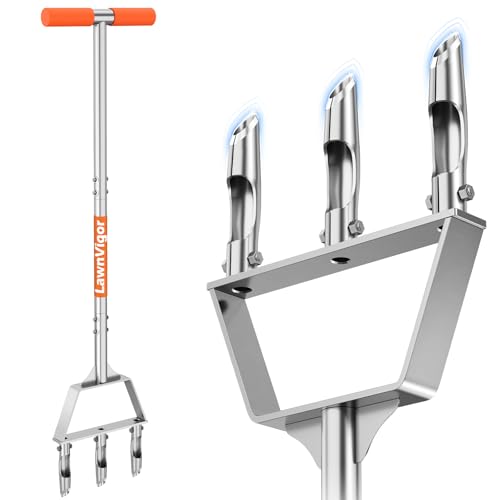
- Three non-clogging hollow tines
- Replaceable tines and steel frame
- Wide foot pedal with ergonomic handle
Best For: Small compacted or clay-soil lawn areas
Best Small-Area Spike Aerator

- 15 sharp iron spikes for wider coverage
- Long handle and foot pedal reduce bending
- Detachable design simplifies storage
Best For: Small lawns and lightly compacted patches
Best Deep-Aeration Tool
Heavy-Duty 4-Inch Core Aerator

- Aerates up to four inches deep
- Replaceable, non-clogging hollow tines
- Reinforced steel frame with wide footplate
Best For: Small areas with dense clay or heavy compaction
Best Adjustable Spike Aerator
Self-Cleaning 15-Spike Yard Tool

- Three height settings for user comfort
- Self-cleaning spring design reduces debris buildup
- 15 three-inch steel spikes loosen soil
Best For: Routine small-lawn spot aeration and soil loosening
Best Compact Core Tool

- Two hollow and two spike tines
- 4.7-inch heat-treated metal tines
- Comfort-grip handle and quick assembly
Best For: Targeted core aeration on small lawns
Best Adjustable Spike Coverage
15-Spike Self-Cleaning Aerator

- Fifteen 1.74-inch iron spikes
- Dual springs help clear soil and leaves
- Height adjusts from 32 to 35 inches
Best For: Small to medium lawns needing efficient spike aeration
Best for Tough Soil
Heavy-Duty 4-Spike T-Handle Aerator
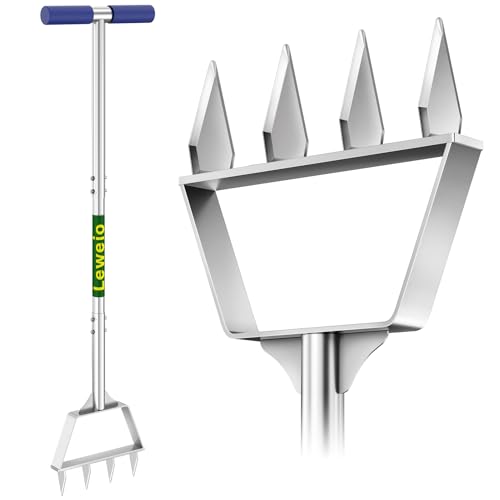
- Four heat-treated conical steel spikes
- Wide foot plate adds downward leverage
- 37.4-inch upright ergonomic design
Best For: Small or medium yards with compacted clay and hard soil
Best Budget-Friendly Pick

- Ready to use without assembly
- Adjustable straps for listed shoe sizes
- Sturdy spike bases and heavy-duty spikes
Best For: Small lawns and low-cost manual aeration
Best Rolling Option

- Efficient rolling design for small to medium lawns
- Weight increases from 32 to 55 pounds
- Auxiliary wheels ease transport
Best For: Push-style aeration with adjustable weight
Best for Compacted Soil

- Removes 3.5-inch soil plugs
- 38-inch upright design reduces bending
- Two hollow tines target compacted ground
Best For: Focused core aeration in private yards
Best Clay-Soil Core Aerator – Manual Hollow-Tine Lawn Aerator
For homeowners comparing lawn aerators for small lawns, this manual core aerator is a practical choice when you want to remove soil plugs rather than simply puncture the surface. Its three hollow tines are designed for compacted or clay soil, while the tall handle and wide foot pedal help make targeted aeration more manageable.
Best For: Small lawn areas with compacted soil where deeper plug removal and focused aeration are preferred.
Pros:
- Three hollow tines create deeper holes and are designed to resist clogging.
- Heat-treated metal tines and a bend-resistant steel frame support repeated use.
- Ergonomic handle and wide foot pedal improve comfort and leverage.
- Replaceable tines and quick assembly add convenience for ongoing maintenance.
Cons:
- Dry soil should be watered before use for easier penetration.
- The manufacturer advises against rocking, twisting, or prying the tool sideways.
This is a focused plug aerator for gardeners who want effective core removal in smaller areas. It is especially appealing for clay soil, provided you prepare dry ground first and use a straight downward motion.
Best Small-Area Spike Aerator – Walensee 15-Spike Manual Tool
If you need lawn aerators for small lawns, the Walensee manual spike tool is built for spot aeration, narrow spaces, lawn edges, and lightly compacted patches. Its 15-spike head covers more ground per step than a single-row tool, without the fitting and balancing issues associated with aerator shoes.
Best For: Small lawns, edges, bare spots, and routine aeration in lightly compacted soil.
Pros:
- Fifteen 2.8-inch iron spikes provide broad coverage across three rows.
- A 34.6-inch handle, cushioned T-handle, and foot pedal help reduce bending.
- Detachable construction makes assembly, carrying, and storage easier.
- Powder-coated heavy-duty iron is intended for repeated outdoor use.
Cons:
- Not recommended for heavy sticky clay, rocky ground, or large-scale jobs.
- Hard or dry soil should be watered before aerating.
This model prioritizes coverage and ease of handling over deep plug removal. It is a sensible fit for maintaining smaller lawns regularly, especially when the soil is only lightly compacted.
Best Deep-Aeration Tool – Heavy-Duty 4-Inch Core Aerator
Among lawn aerators for small lawns, this heavy-duty core aerator stands out for homeowners who want deeper penetration into compacted or clay soil. Its three hollow tines can reach up to four inches, while the reinforced steel frame and wide footplate provide leverage for demanding spot-aeration work.
Best For: Small lawn sections with dense clay or heavily compacted soil requiring deep core aeration.
Pros:
- Hollow tines reach up to four inches for deeper soil aeration.
- Non-clogging, replaceable tines automatically eject soil plugs.
- Reinforced welded steel construction and wide foot pedal support forceful use.
- 37-inch height and rubber-grip T-handle help reduce bending and hand fatigue.
Cons:
- Dry soil should be watered before use.
- Users should avoid rocking or twisting the tool while it is in the ground.
This is the strongest match here for deep, targeted core aeration. It may be more tool than necessary for lightly compacted turf, but its depth and durable build make it useful when smaller lawn areas need serious soil relief.
Best Adjustable Spike Aerator – Self-Cleaning 15-Spike Yard Tool
For shoppers seeking lawn aerators for small lawns with easier handling, this adjustable manual spike aerator combines 15 three-inch steel spikes with a self-cleaning spring design. Its three height settings can accommodate different users, and the mostly assembled construction is convenient for quick spot aeration.
Best For: Small lawn maintenance where adjustable handle height, reduced cleanup, and spike-based soil loosening are priorities.
Pros:
- Self-cleaning dual-layer spring design helps remove attached dirt and debris.
- Three adjustable handle heights can improve comfort for different users.
- Fifteen three-inch steel spikes create channels for air, water, and nutrients.
- Heavy-duty iron construction and detachable storage-friendly design support repeated use.
Cons:
- Spike aeration does not remove soil plugs like a core aerator.
- Assembly is required, though the supplied notes describe it as taking less than three minutes.
This model is a convenient choice for routine loosening and spot aeration rather than deep plug removal. The adjustable height and self-cleaning feature make it particularly practical when comfort and reduced maintenance matter.
Best Compact Core Tool – 4-Tine Manual Core Aerator
For homeowners comparing lawn aerators for small lawns, this manual core aerator offers a focused way to relieve compaction without a motor. Its two hollow and two spike tines reach 4.7 inches, while the long comfort-grip handle helps make spot aeration easier on your back.
Best For: Small lawns needing targeted core aeration and improved water, oxygen, and nutrient penetration.
Pros:
- Combines two hollow tines with two spike tines for versatile aeration.
- Heat-treated metal tines are designed for durability and deep penetration.
- Long comfort-grip handle helps reduce hand and back fatigue.
- Assembles in about five minutes with the included tools.
Cons:
- Requires pre-watering for the easiest soil penetration and plug removal.
- Manual operation takes more effort than powered equipment.
This is a practical choice when you want genuine core aeration in a compact yard and prefer a simple, low-maintenance hand tool. The four-tine layout keeps the design manageable, though larger areas will require repeated passes.
Best Adjustable Spike Coverage – 15-Spike Self-Cleaning Aerator
Among lawn aerators for small lawns, this heavy-duty manual model stands out for its 15-spike layout and automatic dirt-and-leaf-clean design. The adjustable 32- to 35-inch height also makes it easier to match the tool to your stance and lawn conditions.
Best For: Small to medium lawns where broad spike coverage, adjustable height, and easier cleanup are priorities.
Pros:
- Fifteen 1.74-inch iron spikes provide uniform soil loosening.
- Dual-layer spring design helps remove soil and dried leaves after aeration.
- Adjustable height supports more ergonomic use for different users.
- Thickened iron construction is treated for durability and rust resistance.
Cons:
- Spike aeration does not remove soil plugs like a hollow-core tool.
- Assembly still requires screws, washers, and the included small wrench.
The standout feature is the spring-assisted cleaning system, which addresses a common annoyance with spike aerators. Choose it when quick repeated passes and user comfort matter more than extracting cores from compacted soil.
Best for Tough Soil – Heavy-Duty 4-Spike T-Handle Aerator
For lawn aerators for small lawns with compacted clay or other difficult soil, this steel T-handle model emphasizes leverage and deep penetration. Its four conical, heat-treated spikes work with a wide foot plate and cushioned handle so you can apply body weight while standing upright.
Best For: Small and medium yards with compacted clay, sand, or loam that need forceful manual aeration.
Pros:
- Heat-treated conical steel spikes are designed to resist bending in tough soil.
- Wide foot plate and reinforced frame help maximize downward force.
- 37.4-inch height, cushioned T-handle, and foot bar support upright use.
- Triangular spike design is intended to reduce clogging compared with traditional core plugs.
Cons:
- Four spikes cover less area per pass than a multi-spike aerator.
- Spike aeration does not pull out soil cores.
This is the most force-oriented option of the three, making it a strong fit when soil hardness is the main obstacle. Its limited spike count may mean more passes, but the leverage-focused design can make stubborn areas more manageable.
Best Budget-Friendly Pick – Pre-Assembled Aerator Shoes
For homeowners comparing lawn aerators for small lawns, these pre-assembled shoes offer a compact, low-cost way to aerate without renting a machine. Adjustable straps and sturdy spike bases make them simple to use, though walking technique and adequately moistened soil are important for effective penetration.
Best For: Small lawns, patios, gardens, and shoppers seeking a simple manual aeration option.
Pros:
- Fully assembled and ready to wear.
- Adjustable Velcro straps fit listed women’s sizes 6–10 and men’s sizes 6–9.
- Aluminum-alloy and plastic bases are designed for durability.
- Heavy-duty spikes are intended for hard soil, rocks, and slopes.
Cons:
- Walking in spike shoes can be less controlled than using a handled aerator.
- Best results require thoroughly watering the lawn first.
- Fit is limited to the listed shoe-size ranges.
These shoes are a practical choice when storage space and budget matter most. They are especially suitable for small areas, but users who want consistent plug removal or a more upright posture may prefer a core aerator.
Best Rolling Option – Heavy-Duty Push Spike Aerator
For small to medium lawns, this rolling spike aerator provides a more efficient alternative to aerator shoes. Its 32-pound body can be weighted up to 55 pounds with sand or stones, while the spiral-spiked tread and auxiliary wheels help with control and transport.
Best For: Small to medium-sized lawns where users want a push-style tool with adjustable weight.
Pros:
- Rolling design is described as more efficient than shoes or step-style aerators.
- Extra sand or stones can increase operating weight up to 55 pounds.
- Auxiliary wheels help move the tool between the lawn and storage area.
- Main body arrives assembled; only the handle requires attachment.
Cons:
- At 38.3 pounds before added material, it may be cumbersome for some users.
- It requires storage space for a 49-inch-long tool.
- The drum should not be filled with water.
This is a strong fit for shoppers who want more coverage and control than spike shoes provide. Its added weight can help penetration, but the heavier rolling format may be more tool than necessary for very small or lightly compacted lawns.
Best for Compacted Soil – Manual Core Aerator
Among lawn aerators for small lawns, this manual core tool stands out for removing actual soil plugs rather than only puncturing the surface. Its two hollow tines reach 3.5 inches, and the 38-inch T-handle supports upright use while targeting compacted areas.
Best For: Homeowners with private yards who need focused core aeration for compacted soil.
Pros:
- Two hollow tines remove 3.5-inch soil plugs.
- 38-inch frame helps reduce bending during use.
- Anti-slip foot bar and T-handle provide leverage.
- Heavy-duty steel construction supports repeated manual use.
Cons:
- Manual coring requires repeated stepping and physical effort.
- For best penetration, the lawn should be watered or used after rainfall.
- It requires assembly with the included hardware.
This is the most targeted option of the three for compacted patches and preparation before overseeding or nutrient application. It is slower than a rolling tool across a larger area, but its plug-removal design offers more substantial soil opening for a small lawn.
How We Picked These Lawn Aerators for Small Lawns
We focused on manual tools that suit the limited scale and tighter access of small lawns. The selection includes core aerators that remove plugs, spike models that puncture the soil, rolling tools for faster coverage, and shoes for hands-free use. We also considered tine or spike construction, stated working depth, clog-resistant or self-cleaning designs, handle comfort, adjustability, storage, and the type of soil each tool is intended to handle.
Because product performance depends heavily on soil moisture and lawn condition, specifications such as hollow tines, replaceable parts, wide footplates, and steel frames were treated as practical indicators rather than guarantees. Always aerate when the soil is moist but not saturated.
Quick Comparison
| Tool type | Best suited to | Main advantage | Potential drawback |
|---|---|---|---|
| Core aerator | Compacted or clay soil | Removes plugs for deeper relief | Requires more effort and cleanup |
| Spike aerator | Routine light compaction | Simple, affordable, and easy to store | Can compress soil around punctures |
| Rolling aerator | Open small-to-medium lawns | Covers ground with fewer steps | Less precise around edges and obstacles |
| Aerator shoes | Very small patches or occasional use | Compact and hands-free | Less consistent depth and stability |
Key Buying Factors for Lawn Aerators for Small Lawns
Core Removal Versus Spike Penetration
For genuinely compacted soil, hollow-tine core aerators are usually the more effective choice because they remove plugs and create room for expansion. Spike tools are easier to use and maintain, but they are better for mild compaction or regular upkeep.
Depth, Tine Design, and Soil Type
Look for a stated working depth that matches your lawn’s needs. Longer, stronger tines can help with clay, but they also demand more force. Non-clogging or self-cleaning designs are useful when soil is damp, while replaceable tines can extend the tool’s service life.
Comfort and Maneuverability
Small lawns often contain borders, trees, beds, and narrow passages. A comfortable long handle, broad footplate, manageable weight, and compact storage profile can matter more than maximum coverage. Rolling models save time on open areas but may be awkward in tight corners.
Timing and Technique
Aerate during active grass growth and work only when the soil is moist enough to penetrate. Make overlapping passes over severely compacted sections, then leave removed plugs on the lawn to break down naturally unless the manufacturer advises otherwise.
Who Should Buy Which Lawn Aerators for Small Lawns?
Choose a hollow-tine core aerator if your lawn has clay soil, standing water, or persistent compaction. Select a spike aerator for lighter maintenance and the simplest storage. A rolling aerator is the practical option for a relatively open lawn where speed matters. Choose aerator shoes only for small, accessible patches when you are comfortable maintaining consistent footing and pressure.
For most homeowners comparing Lawn Aerators for Small Lawns, a durable manual core model offers the best balance of meaningful soil relief and precise coverage. If the lawn is only mildly compacted, an adjustable spike tool may be easier to use frequently.