Weeds can quickly compete with vegetables for water, nutrients, and sunlight, but the right landscape fabric can make garden maintenance far more manageable. This roundup compares 10 heavy-duty woven and non-woven options in practical sizes for beds, paths, and larger growing areas.
Before buying, consider the fabric’s material, weight, water permeability, dimensions, and how you plan to secure and cover it. The best choice depends as much on your garden layout as on the fabric itself.
Best 10 Landscape Fabrics for Vegetable Gardens Picks for 2026
Heavy-Duty Pick

- 3.2-ounce woven polypropylene
- Permeable and breathable design
- Two 4-by-50-foot pieces
Best For: Large vegetable plots and multi-purpose landscaping
Large-Coverage Pick

- 300-foot roll for extensive coverage
- 3.2-ounce tear-resistant polypropylene
- Water and nutrients can pass through
Best For: Large gardens, farms, and landscaping projects
Easy-Cut Pick

- Non-woven, no-fray construction
- Includes 30 landscape staples
- Designed for vegetable gardens
Best For: Clean installation around vegetable beds
Wide-Format Pick
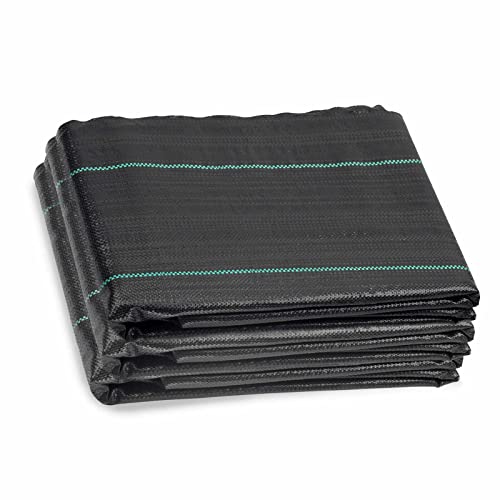
- Wide 6-by-50-foot format
- 3.2-ounce woven polypropylene
- Green stripes aid alignment
Best For: Wide beds, paths, and underlayment projects
Heavy-Duty Coverage
4ft x 300ft Weed Barrier Fabric

- 1,200 sq. ft. of woven polypropylene coverage
- Blocks up to 98% of sunlight
- Water-, air-, and nutrient-permeable design
Best For: Large vegetable gardens and raised beds
Wide Garden Protection
6x300FT Heavy-Duty Weed Barrier

- Six-foot unfolded width for broad coverage
- Includes 20 U-shaped fixing staples
- Guide lines help with accurate trimming
Best For: Large vegetable patches and wide landscaping areas
Grid-Guided Planting
4ft x 300ft Grid Landscape Fabric

- 13.4-inch planting grid aids spacing
- Tear- and weather-resistant material
- Micro-porous weave allows air and water through
Best For: Organized vegetable beds and raised gardens
Best with Extra Features
3ft x 100ft Woven Weed Barrier

- Long 100-foot roll for larger areas
- Durable 3.2-ounce polypropylene construction
- Allows water and nutrients through
Best For: Large garden beds and landscaping projects
Opaque Garden Protection
2.6ft x 100ft Dual-Layer Fabric

- 99.8% opaque for light blocking
- Weatherproof and UV stabilized
- Breathable for water access to roots
Best For: Narrow beds, greenhouses, and garden walkways
Compact Heavy-Duty Roll
3ft x 50ft Garden Ground Cover
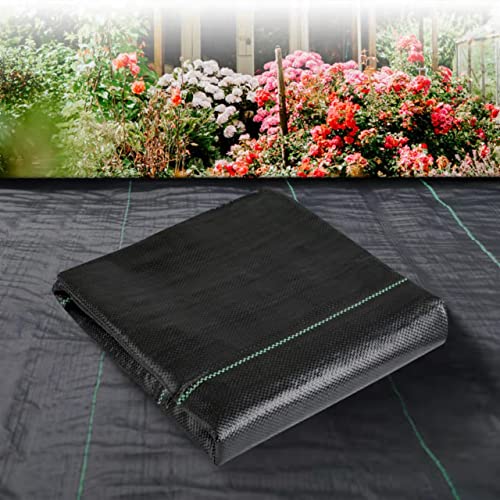
- Manageable 50-foot roll
- 3.2-ounce tear-resistant polypropylene
- Supports water and nutrient flow
Best For: Medium garden beds and underlayment projects
Heavy-Duty Pick – LAVEVE Woven Weed Barrier
For gardeners comparing landscape fabrics for vegetable gardens, LAVEVE offers a heavy-duty woven polypropylene barrier with guide lines for easier placement. Its permeable construction is designed to block weeds while allowing air and water to reach the soil.
Best For: Large vegetable plots, garden beds, paths, and projects needing a durable, versatile fabric.
Pros:
- 3.2-ounce woven polypropylene construction is designed for durable weed control.
- Permeable, breathable design allows air and water to pass through.
- Green guide lines make alignment and planting easier.
- Two 4-by-50-foot pieces provide a total of 100 feet of coverage.
Cons:
- Securing pegs are needed for installation but are not listed as included.
- Woven fabric must be cut carefully to prevent uneven edges.
LAVEVE is a practical choice when you want broad coverage, visible planting guides, and a fabric suited to both vegetable areas and general landscaping.
Large-Coverage Pick – 300-Foot Woven Weed Barrier
This landscape fabric for vegetable gardens is aimed at gardeners and landscapers who need substantial coverage in one roll. The 3.2-ounce woven polypropylene material is designed to suppress weeds while allowing water and nutrients to reach the soil.
Best For: Extensive gardens, farms, flower beds, and landscaping projects requiring a 300-foot roll.
Pros:
- 300-foot length suits large planting and landscaping areas.
- Heavy-duty polypropylene is described as tear-resistant.
- Allows water and nutrients to flow to the soil.
- Can be cut to size and finished with mulch.
Cons:
- The large roll may be more material than a small garden requires.
- Mulch is needed to finish the recommended installation.
Choose this option when coverage is the priority. Its long roll and traffic-oriented construction also make it useful beyond vegetable beds, including driveways and erosion-control applications.
Easy-Cut Pick – Grenebo No-Fray Garden Fabric
Grenebo stands out among landscape fabrics for vegetable gardens with a non-woven, no-fray design that is easy to trim. It is made to block light, support water and air flow, and simplify installation with 30 included landscape staples.
Best For: Vegetable gardens and garden beds where clean cuts, easy handling, and included staples matter.
Pros:
- No-fray material cuts cleanly without unraveling edges.
- Non-woven structure is designed for high air and water permeability.
- Black-and-green reversible design offers placement flexibility.
- Includes 30 U-shaped staples for installation.
Cons:
- The fabric arrives folded and must be fully unfolded before use.
- Its 4-by-100-foot size may be excessive for small beds.
Grenebo is a convenient fit for gardeners who want tidy trimming and a straightforward setup. The included staples and vegetable-garden-oriented material make it especially user-friendly for bed projects.
Wide-Format Pick – Groweco 6-Foot Weed Mat
For gardeners seeking landscape fabrics for vegetable gardens with wider coverage, Groweco provides a 6-by-50-foot woven polypropylene mat. Green stripes help with alignment and trimming, while the permeable design allows air and water to reach the soil.
Best For: Wide vegetable paths, raised-bed projects, walkways, gravel areas, and underlayment applications.
Pros:
- Six-foot width can cover broad areas with fewer seams.
- 3.2-ounce polypropylene construction is designed for heavy-duty use.
- Green stripes help with alignment and cutting.
- Suitable for vegetable paths, raised beds, driveways, and artificial-grass underlayment.
Cons:
- The 50-foot roll may require more material planning for small beds.
- Scissors are needed to cut the fabric to shape.
Groweco is a strong option when width and versatility are more important than a compact roll. Its layout guides and broad format can make larger garden and pathway projects more efficient.
Heavy-Duty Coverage – 4ft x 300ft Weed Barrier Fabric
For gardeners comparing landscape fabrics for vegetable gardens, the EXTRAEASY 4-by-300-foot roll offers broad coverage and a durable woven polypropylene construction. Its 3.2-ounce fabric is designed to block sunlight while allowing water, air, and nutrients to reach the soil.
Best For: Large vegetable gardens, raised beds, orchards, and mixed landscaping areas that need long-lasting weed suppression.
Pros:
- Large 1,200-square-foot roll covers extensive garden and landscape areas.
- Heavy-duty woven polypropylene resists tearing and tolerates sun, rain, mulch, gravel, and foot traffic.
- Allows water, air, and nutrients to pass through while blocking up to 98% of sunlight.
- Can be cut to fit around raised beds, trees, irrigation lines, and other features.
Cons:
- The 4-foot width may require more seams for especially wide beds.
- Landscape staples are needed for installation but are not listed as included.
This is a practical high-coverage option when durability and broad weed control matter. Covering it with mulch, wood chips, or gravel may extend its service life to 7 or more years.
Wide Garden Protection – 6x300FT Heavy-Duty Weed Barrier
This 6-by-300-foot roll is a strong choice for landscape fabrics for vegetable gardens when wide bed coverage is the priority. The 3.2-ounce polypropylene fabric includes green guide lines for trimming and comes with 20 U-shaped fixing staples.
Best For: Wide vegetable patches, large garden layouts, driveways, drainage projects, and erosion-control applications.
Pros:
- Six-foot unfolded width helps cover broad areas with fewer seams.
- Durable, tear-resistant polypropylene is designed for demanding outdoor conditions.
- Permeable construction lets air and water reach the soil while helping suppress weeds.
- Green guide lines support more accurate cutting, and 20 staples are included.
Cons:
- The roll is half-fold packaged, so it must be fully unfolded to reach its stated 6-foot width.
- Its 35-pound weight may make handling a large roll more demanding.
The generous width and included staples make this especially convenient for large plots. Just account for the half-fold packaging during setup and allow enough space to unfold the material fully.
Grid-Guided Planting – 4ft x 300ft Grid Landscape Fabric
For landscape fabrics for vegetable gardens that also help organize planting, this 4-by-300-foot weed barrier has a visible 13.4-by-13.4-inch grid. The tear-resistant, weather-resistant material supports spacing rows while allowing air and water to pass through its micro-porous weave.
Best For: Vegetable beds and raised gardens where consistent plant spacing and straightforward installation are important.
Pros:
- Printed grid works as a planting ruler for more evenly spaced vegetables.
- Commercial-grade material is designed to withstand foot traffic, moisture, and temperature extremes.
- Narrow-weave construction helps resist weed emergence while maintaining air and water permeability.
- Can be trimmed with scissors and secured with staples or mulch.
Cons:
- The 4-foot width may require overlapping sections in wider beds.
- Staples are recommended for securing the fabric but are not listed as included.
This option stands out for gardeners who want weed suppression plus a built-in planting layout aid. Its grid can reduce measuring and help create straighter, more consistent vegetable rows.
Best with Extra Features – 3ft x 100ft Woven Weed Barrier
For larger planting areas, this 3ft x 100ft woven fabric is a practical option among landscape fabrics for vegetable gardens. Its polypropylene construction is designed for weed control while allowing water and nutrients to reach the soil.
Best For: Large garden, landscaping, agricultural, and erosion-control projects that need a long roll of durable fabric.
Pros:
- Generous 100-foot length for covering larger areas.
- 3.2-ounce polypropylene fabric is tear-resistant and built for heavy use.
- Allows water and nutrients to flow through to plant roots.
- Can be cut to fit different sizes and shapes.
Cons:
- The 3-foot width may require overlapping strips for wider beds.
- Designed to be covered with mulch or another landscaping material for a finished look.
Choose this roll when coverage and durability matter more than a compact format. It is especially useful for gardeners planning several beds or other large outdoor applications.
Opaque Garden Protection – 2.6ft x 100ft Dual-Layer Fabric
This 2.6ft x 100ft fabric is a flexible choice for landscape fabrics for vegetable gardens, beds, walkways, and other outdoor projects. Its 99.8% opaque woven design is intended to block light while remaining breathable for water access.
Best For: Garden beds, narrow planting areas, greenhouses, gravel walkways, and projects requiring a foldable 100-foot roll.
Pros:
- 99.8% opacity helps block ultraviolet light and suppress weed growth.
- Breathable material allows water to reach plant roots.
- Polypropylene, dual-layer construction is weatherproof and UV stabilized.
- Can be cut to the required size and covered with mulch or gravel.
Cons:
- The 2.6-foot width may not cover broad beds in one strip.
- It is folded before rolling, which may require extra handling during setup.
This fabric stands out for gardeners who want high opacity and a versatile width for smaller or irregular spaces. Plan the layout carefully and cover it after installation to create the intended finished surface.
Compact Heavy-Duty Roll – 3ft x 50ft Garden Ground Cover
For medium-sized beds, this 3ft x 50ft woven ground cover offers a manageable option among landscape fabrics for vegetable gardens. The 3.2-ounce polypropylene material is designed to resist tearing, block weeds, and let water and nutrients pass through.
Best For: Medium garden beds, landscaped areas, agricultural uses, and driveway underlayment where a shorter roll is more convenient.
Pros:
- 50-foot length is easier to manage for smaller projects.
- High tensile strength and tear resistance support demanding outdoor use.
- Allows water and nutrients to flow to the soil below.
- Can be cut to fit different shapes and installed under mulch or landscaping material.
Cons:
- Provides less total coverage than the 100-foot alternatives.
- The 3-foot width may require multiple runs on wider beds.
This is a sensible middle-ground roll for gardeners who want heavy-duty material without committing to 100 feet. Its shorter length can simplify measuring, cutting, and placement around average-size garden projects.
How We Picked the Best Landscape Fabrics for Vegetable Gardens
We focused on landscape fabrics designed for sustained outdoor use around vegetable beds, garden paths, flower borders, and other planted areas. Our comparison emphasizes construction, listed thickness or weight, coverage options, permeability, resistance to fraying and tearing, and installation practicality.
Woven polypropylene fabrics are commonly favored for vegetable gardens because they block light while allowing air and water to pass through. Non-woven products can also work well where flexibility and clean cutting matter. Since weed fabric is only one part of a successful installation, we also considered whether each format suits small beds, long rows, or broad areas requiring fewer seams.
Quick Comparison
| What to Compare | Best For | What to Look For |
|---|---|---|
| Width and length | Matching your garden layout | Enough coverage with minimal seams and waste |
| Fabric weight | Long-term durability | Heavier material for high-traffic or exposed areas |
| Woven construction | Vegetable beds and paths | Light blocking with water and air flow |
| Non-woven construction | Irregular shapes and easy cutting | Clean handling and adequate permeability |
| Roll size | Project efficiency | A format suited to your bed dimensions |
Key Buying Factors for Landscape Fabrics for Vegetable Gardens
Material and Weed-Blocking Performance
Choose a fabric that blocks sunlight effectively without preventing irrigation from reaching the soil. Heavy-duty woven polypropylene is a practical choice for many beds and pathways, while lighter materials may be easier to handle but less suitable for repeated foot traffic or exposed ground.
Size and Layout
Measure the area before ordering, then allow extra material for overlaps, edges, and cuts around plants. Narrow rolls can be convenient for individual rows, while wider, longer rolls reduce seams across large beds. Overlap adjoining pieces rather than leaving gaps where weeds can emerge.
Permeability and Installation
Water-permeable fabric is essential around vegetables because it lets rain and irrigation reach the root zone. Secure the fabric with landscape staples, keep it taut, and cut only openings large enough for each plant. A layer of mulch can protect the material from sunlight and improve its appearance.
Durability and Maintenance
Look for tear-resistant construction and edges that are unlikely to fray during cutting or installation. Fabric does not eliminate all maintenance: windblown soil can support weeds on top, and perennial weeds may require removal before the fabric is laid.
Who Should Buy Which Landscape Fabrics for Vegetable Gardens?
- For small raised beds or narrow rows: Choose a shorter, narrower roll that is easy to position and creates little leftover material.
- For long vegetable beds and garden paths: A 3-foot or 4-foot roll with substantial length can reduce joins while remaining manageable for one or two people.
- For large gardens or landscaping projects: Wider, 300-foot rolls are better suited to extensive coverage and can lower the number of seams.
- For demanding, high-traffic areas: Prioritize heavier woven fabric and plan to anchor the edges securely beneath mulch or soil.
- For irregular beds and frequent cutting: Consider a fabric marketed as easy to cut or non-fraying, then test a small section before completing the installation.
The best Landscape Fabrics for Vegetable Gardens are the ones that match your coverage needs, allow dependable water flow, and can be installed tightly enough to prevent light from reaching the soil.