If you want healthier roots, better soil control, and a more comfortable growing height, a deep planter can make vegetable gardening much easier. The right wood bed gives you room for root crops, richer soil, and a cleaner setup for patios, decks, and backyards.
This roundup focuses on the best deep wood planter for vegetables options for 2026, with an eye on depth, stability, drainage, and overall growing space.
Best 10 Deep Wood Planter for Vegetables Picks for 2026
Deep-Yield Patio Pick
48 x 24 x 30 in. Extra Deep Fir Bed

- 16-inch soil depth for root vegetables
- Built-in drainage for healthier soil conditions
- Elevated fir wood frame with reinforced corners
Best For: Patios, balconies, and small backyards needing a deep vegetable planter
Heavy-Duty Elevated Option
48 x 24 x 31 in. Reinforced Fir Planter

- Beam-and-column design supports 331 lbs
- 31-inch height reduces bending and kneeling
- Includes drainage holes and a waterproof liner
Best For: Heavy-duty elevated gardening on patios, decks, or balconies
Spacious Open-Base Bed

- 44 cubic feet of planting space
- 15-inch depth for vegetables and herbs
- Open base improves drainage and root development
Best For: Large outdoor vegetable gardens needing a roomy wood planter
Long-Format Deep Bed
72 x 24 x 30 in. Extra Deep Fir Planter

- 16-inch depth for root vegetables
- 72-inch length adds more planting room
- Reinforced fir wood with built-in drainage
Best For: Small-space gardeners who want a longer deep planter
Spacious Full-Length Bed
Yaheetech 90.5" x 23.5" x 16" Wooden Raised Garden Bed

- 16-inch height supports deeper vegetable roots
- Large 90.5-inch length offers roomy planting space
- Single-piece sides help stability and reduce leakage
Best For: Long, deep planting for vegetables, herbs, and flowers
Flexible Divided Bed
Yaheetech 8x2ft Wooden Horticulture Raised Garden Bed
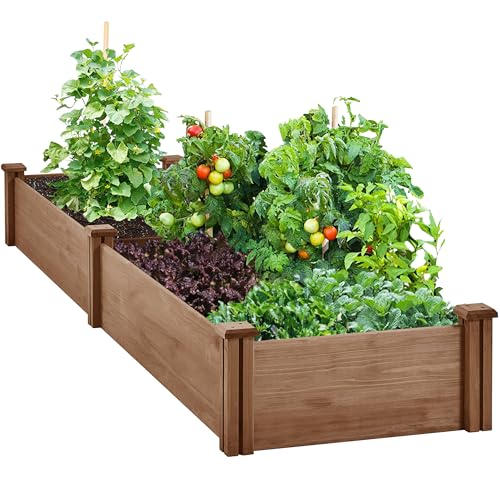
- Divisible layout creates two planting zones
- Removable baffle allows one larger grow area
- Long 8-foot bed suits mixed planting setups
Best For: Gardeners who want flexible, divided planting space
Extra Deep Yield Bed

- 16-inch depth suits root vegetables and dense planting
- Fir wood build with reinforced corners adds stability
- Elevated frame helps with easier planting and harvesting
Best For: People growing carrots, beets, radishes, and mixed vegetables in a deep raised bed
Storage Shelf Planter
48" Elevated Wooden Garden Bed

- 33-inch height reduces bending during garden care
- 48-gallon capacity works for vegetables, herbs, and flowers
- Built-in shelf adds handy storage for tools and supplies
Best For: Gardeners who want a taller planter with storage and easier access
Compact Deep Bed

- 16-inch depth supports mixed vegetable and herb planting
- Compact 4x2 ft footprint suits patios and balconies
- Drainage holes and firm joinery support healthy growth
Best For: Small-space gardeners who need a compact but deep planter
Deep-Yield Patio Pick – 48 x 24 x 30 in. Extra Deep Fir Bed
If you want a deep wood planter for vegetables that can handle root crops without taking up a huge footprint, this elevated fir bed is a practical fit. The 16-inch soil depth gives carrots, beets, and radishes room to develop, while the built-in drainage helps keep the soil from getting waterlogged.
Best For: Small-space gardeners who want a deep raised bed for root vegetables, herbs, and compact backyard setups.
Pros:
- 16-inch depth supports deeper-rooted vegetables and larger harvests
- Built-in drainage helps maintain breathable, properly watered soil
- Solid fir wood with reinforced corner posts adds sturdiness
- Elevated design makes planting and harvesting easier on your back
Cons:
- Best suited to smaller spaces rather than large garden plots
- Requires assembly
Overall, this planter is a strong all-around choice if depth and elevation matter most. It balances usable growing space, practical drainage, and a compact footprint for patio or balcony gardening.
Heavy-Duty Elevated Option – 48 x 24 x 31 in. Reinforced Fir Planter
This deep wood planter for vegetables is built for gardeners who want a sturdier elevated bed with serious load capacity. The beam-and-column structure is designed to hold up to 331 lbs of soil and plants, while the 31-inch height helps reduce bending during daily care.
Best For: Gardeners who want a reinforced raised bed for vegetables, flowers, and herbs with an elevated working height.
Pros:
- Beam-and-column construction supports up to 331 lbs
- 31-inch height is easier on knees and back
- 4 drainage holes help manage excess water
- Includes a waterproof PE liner to help protect the wood
Cons:
- Only 9 inches of planting depth, despite the tall frame
- Waterproof liner may need modification to preserve drainage
If structure and ergonomic height matter more than soil depth, this is a smart choice. It offers a durable elevated build for patio or balcony growing with practical drainage and pest-deterring height.
Spacious Open-Base Bed – 8×4 Ft 15-Inch Fir Planter
If you need a deep wood planter for vegetables with more growing room, this 8×4-foot fir bed is built for volume. Its 15-inch depth and 44 cubic feet of planting space make it suitable for crops like lettuce and tomatoes, and the open-base design supports drainage and root development.
Best For: Gardeners who want a large outdoor vegetable bed with plenty of planting space and an open-bottom layout.
Pros:
- Large 8×4-foot footprint with 44 cubic feet of space
- 15-inch depth gives vegetables room to grow
- Open-base design supports drainage and root health
- Mortise and tenon structure is quick to assemble
Cons:
- Much larger footprint than compact patio planters
- Open-base design may not suit every surface or setup
This is a solid pick when planting space matters more than portability. It’s especially appealing for gardeners building a dedicated outdoor vegetable bed with a clean, durable wood look.
Long-Format Deep Bed – 72 x 24 x 30 in. Extra Deep Fir Planter
For gardeners who want a deep wood planter for vegetables with more length for staggered planting, this 72-inch fir bed is a useful upgrade. It keeps the same 16-inch soil depth as the smaller version, while the longer frame offers more room for crops and better overall productivity.
Best For: Gardeners who want a longer elevated planter for root vegetables, herbs, and small-space outdoor growing.
Pros:
- 16-inch depth supports root vegetables like carrots, beets, and radishes
- Longer 72-inch frame gives more planting room
- Built-in drainage helps keep soil breathable
- Reinforced fir wood construction adds durability
Cons:
- Still a freestanding raised bed, so it needs floor space
- Assembly required
This model makes sense if you like the deeper planting profile but want extra horizontal space. It’s a practical choice for patios and decks where a longer bed can help you maximize yield without going fully oversized.
Spacious Full-Length Bed – Yaheetech 90.5" x 23.5" x 16" Wooden Raised Garden Bed
If you want a deep wood planter for vegetables with plenty of room to spread out, this Yaheetech raised bed gives you a long, wide growing area and a full 16-inch height. That depth is useful for vegetables, herbs, and flowers, while the fir wood build and drainage hole support practical outdoor use in a backyard or greenhouse.
Best For: Gardeners who want a long, deep raised bed for mixed vegetable, herb, or flower planting.
Pros:
- Large 90.5″ x 23.5″ x 16″ inner space for generous planting room
- Fir wood construction with painted finish for a rustic look and low-maintenance use
- Single-piece side boards help improve stability and reduce soil leakage
- Drainage hole and weather-resistant design suit outdoor growing
Cons:
- Large footprint may be too big for very small patios or balconies
- Floor-standing design may require a level placement area
This is a strong choice if you want maximum horizontal growing space in a classic raised-bed format. It focuses more on roomy planting and simple stability than on compact portability.
Deep Patio Grower – Best Choice Products 48" x 24" x 30" Raised Garden Bed
This deep wood planter for vegetables is built for gardeners who want extra soil depth without taking over the whole yard. With 16 inches of planting depth and an elevated stand, it supports root crops like carrots, beets, and radishes while keeping the bed comfortable to work in on a patio, balcony, or small backyard.
Best For: Small-space gardeners who want a deep elevated bed for root vegetables and herbs.
Pros:
- 16-inch soil depth supports healthy root development for deeper crops
- Elevated height makes planting and harvesting easier on the back
- Built-in drainage helps keep soil breathable and properly watered
- Solid fir wood with reinforced corner posts adds sturdy support
Cons:
- Smaller overall footprint than longer garden beds
- Unfinished wood may need more attention over time depending on placement
If your goal is productive vegetable growing in a compact footprint, this model is well aligned with that use. It balances depth, accessibility, and small-space practicality better than many larger beds.
Flexible Divided Bed – Yaheetech 8x2ft Wooden Horticulture Raised Garden Bed
For gardeners looking for a deep wood planter for vegetables with flexible layout options, this Yaheetech raised bed offers a long 8-foot format and two growing areas that can be separated or combined. The open-bottom, floor-standing design makes it practical for backyard or patio setups when you want room to organize different crops or planting methods.
Best For: Gardeners who want a long raised bed with split planting zones and DIY flexibility.
Pros:
- Divisible design creates two growing areas for different plants or methods
- Removable baffle lets you open up one larger planting space
- Single-piece side plates and upgraded slotting improve stability and assembly flexibility
- Long 8-foot footprint gives ample space for vegetables, flowers, or herbs
Cons:
- 11-inch height is shallower than some other deep planter options
- Open-bottom design may not suit every surface or setup
This bed stands out more for layout flexibility than for maximum soil depth. It is a practical pick if you want to organize crops separately or build out a larger garden system over time.
Extra Deep Yield Bed – 72" Fir Wood Raised Planter
If you want a deep wood planter for vegetables that can handle root crops and heavier harvests, this 16-inch raised bed is built for practical productivity. The roomy planting area, drainage hole, and elevated frame make it a strong fit for backyard or patio growing without a lot of fuss.
Best For: Gardeners who want an extra-deep raised bed for carrots, beets, radishes, and mixed vegetables in small outdoor spaces.
Pros:
- 16-inch soil depth supports root vegetables and fuller planting density
- Built-in drainage helps keep soil breathable and properly watered
- Solid fir wood construction with reinforced corner posts for steadier support
- Elevated height can make planting and harvesting easier while helping deter pets
Cons:
- Large footprint may be too big for very tight spaces
- Assembly is required with multiple pieces
This is a good all-around choice if your priority is depth, growing room, and a more ergonomic gardening setup. It balances capacity and durability well for patio, deck, or small backyard use.
Storage Shelf Planter – 48" Elevated Wooden Garden Bed
This deep wood planter for vegetables is a practical pick if you want standing-height gardening with built-in organization. The 33-inch tall frame, 48-gallon capacity, and lower shelf make it easy to keep tools close while tending vegetables, herbs, and flowers.
Best For: Gardeners who want a taller planter with a storage shelf for easy, organized container-style growing.
Pros:
- 33-inch height reduces bending during planting and maintenance
- 48-gallon capacity gives room for multiple vegetables, herbs, or flowers
- Two-tier design includes a built-in storage shelf for tools and accessories
- Fir wood construction keeps the look natural and avoids chemical additives
Cons:
- Smaller growing area than extra-long raised beds
- Best for lighter, organized gardening rather than maximum-volume growing
Choose this one if convenience matters as much as planting space. It’s especially useful for gardeners who want a standing planter that keeps essentials nearby and makes daily care easier.
Compact Deep Bed – 4×2 Ft Fir Wood Planter
For a deep wood planter for vegetables that fits smaller outdoor areas, this 4×2 ft raised bed offers a useful balance of planting depth and compact footprint. The 16-inch depth, drainage holes, and elevated design make it a sensible choice for balconies, patios, and backyards where space is limited.
Best For: Small-space gardeners who want a compact, elevated planter with enough depth for mixed vegetables and herbs.
Pros:
- 9.5 cu. ft. of planting space supports vegetables, herbs, and flowers
- 16-inch depth is suitable for a range of root depths
- Mortise and tenon construction is designed for stable, tool-free assembly
- Drainage holes help prevent water buildup and improve airflow
Cons:
- Smaller overall size limits how many larger crops you can grow
- Less storage and work surface than taller multi-tier planters
This is a smart choice if you want a straightforward raised bed that doesn’t overwhelm a balcony or patio. It focuses on healthy drainage, workable depth, and a compact shape that still feels garden-friendly.
How We Picked the Best Deep Wood Planter for Vegetables
We looked for planter boxes that balance usable depth, sturdy construction, and practical dimensions for edible gardening. For a Deep Wood Planter for Vegetables, depth matters most when you want better root development for crops like carrots, beets, potatoes, lettuce, and herbs. We also prioritized models with dependable leg support, weather-friendly wood design, and enough surface area to grow more than a few plants at once.
Quick Comparison
The main differences come down to height, footprint, and planting volume. Taller elevated beds are better if you want less bending and easier access, while lower wide beds usually offer more soil capacity and flexibility for larger root zones. Mid-size 4×2-foot options are often the most space-efficient for small patios, while 8-foot and 6-foot beds are better for gardeners who want higher yields or multiple crop sections.
Key Buying Factors for a Deep Wood Planter for Vegetables
Depth and Root Room
Look for at least 12 inches of soil depth for most leafy greens and herbs, and closer to 15 to 16 inches if you plan to grow root vegetables or mixed plantings. Extra depth also helps soil retain moisture longer in hot weather.
Drainage and Airflow
Good drainage is essential in raised beds because vegetables do poorly in waterlogged soil. Check for built-in drainage holes, open-bottom designs, or construction that allows excess water to escape naturally.
Size and Layout
Choose a footprint that fits your space and planting goals. Narrow beds are easier to place along fences or on patios, while larger rectangular beds give you better row planning and higher overall yield. If you are gardening in a limited area, a compact elevated bed may be the most efficient choice.
Materials and Stability
Solid wood construction should feel stable enough to hold heavy, wet soil without bowing. Reinforced legs, thick boards, and secure corner joints matter more as planter size increases.
Who Should Buy Which Deep Wood Planter for Vegetables?
Choose a taller elevated bed if you want easier access, less kneeling, or a patio-friendly setup. Pick a larger rectangular bed if your goal is maximum vegetable production and better crop rotation. If you are growing mostly herbs and greens, a smaller 4×2-foot planter may be enough. For deeper-rooted vegetables, prioritize models with the most soil depth and the most stable frame.
In short, the best choice depends on your space, your crops, and how much maintenance you want. A well-sized Deep Wood Planter for Vegetables can improve drainage, simplify watering, and give your garden a more productive growing season.