Choosing the right circular saw can make every rip cut, crosscut, and framing job faster and cleaner. The best models balance power, blade control, comfort, and the right amount of portability for your work.
Below, we focus on the most useful circular saws for homeowners, DIYers, and pros, with options that stand out for value, performance, and ease of use.
Best 10 Circular Saws Picks for 2026
DIY-Friendly 15-Amp All-Purpose Saw
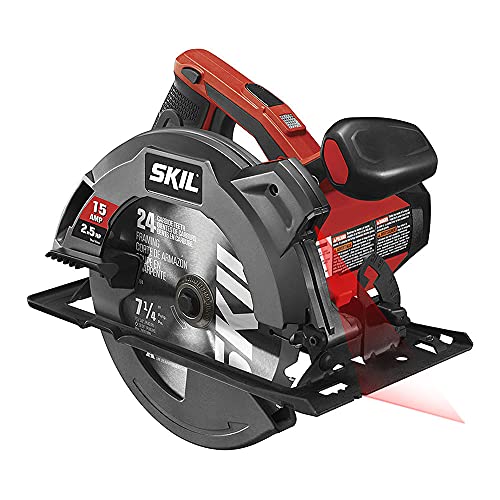
- 15-amp motor with 5,300 RPM
- Laser guide and dust blower help visibility
- 51° bevel with 45° stop for versatility
Best For: Home DIYers who want a simple corded saw for everyday wood cuts
Lightweight Jobsite Corded Pick
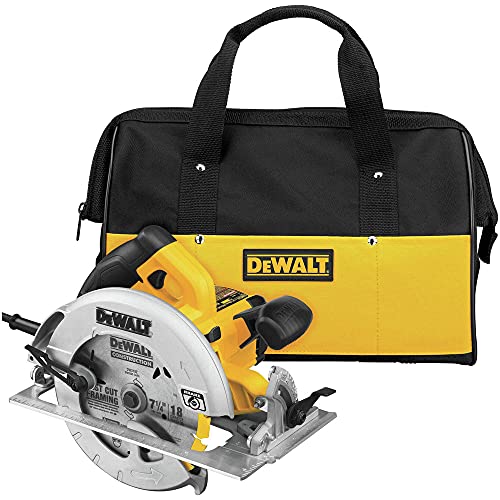
- 8.8-pound corded saw with electric brake
- 15-amp motor and 5,200 RPM cutting power
- 57° bevel capacity with multiple stops
Best For: Contractors and DIYers who want a lightweight corded saw with fast stopping
Budget Corded Workhorse

- 13-amp motor for routine wood cutting
- 15% lighter than SKIL 5380
- 51° bevel and dust blower improve usability
Best For: Budget buyers who want a lighter corded saw for everyday projects
Portable Cordless Sidewinder

- 20V MAX cordless design for portability
- 5150 RPM motor with magnesium shoe
- 0-50° bevel range for versatile cuts
Best For: Mobile users who want a cordless saw and already have batteries
Budget-Friendly Laser Guide Circular Saw
Enventor 7-1/4" Laser Guide Saw

- 10A motor with 5800 RPM cutting speed
- Laser guide and scale ruler support accuracy
- Includes 24T and 40T blades plus rip guide
Best For: DIYers who want guided cuts and extra accessories
Jobsite-Ready Framing Circular Saw
Makita 5007F 7-1/4" Circular Saw

- 15 AMP motor with 5800 RPM performance
- Large cutting capacity for bevel and straight cuts
- Built-in LED lights improve cut-line visibility
Best For: Framers and builders needing durable everyday power
Lightweight Precision Circular Saw
DEWALT DWE575 Lightweight 7-1/4" Saw

- 8.8 lbs makes it one of the lightest in class
- 15 amp motor handles tough cutting tasks
- 53° bevel with dust blower and clear sightline
Best For: Users prioritizing lighter handling and cut visibility
Compact Cordless Cutting

- 3,700 RPM motor for quick cuts
- 2-1/4" cut capacity at 90°
- Tool-only cordless design
Best For: Cordless users needing a lightweight saw for common cuts and bevels
Budget Corded Power

- 14-amp motor for stronger cuts
- 5,300 RPM with 7-1/4" blade
- Dust blower helps clear the line
Best For: Corded buyers who want full-size saw performance for wood cutting
Durable Jobsite Choice
Milwaukee M18 6-1/2" Bare Tool

- 3,500 RPM cordless cutting
- Magnesium guards for durability
- Aircraft aluminum shoe for rip cuts
Best For: Tradespeople needing a tough cordless saw for jobsite tasks
DIY-Friendly 15-Amp All-Purpose Saw – SKIL 5280-01
Among circular saws in this price-and-power class, the SKIL 5280-01 is a straightforward corded option for everyday wood cutting. Its 15-amp motor, included carbide-tipped blade, and built-in laser guide make it a practical pick when you want fast cuts with a little extra line-of-cut help.
Best For: Home DIYers and general woodworking projects that need speed, visibility, and simple blade changes.
Pros:
- 15-amp motor delivers 5,300 RPM for fast cutting
- Single beam laser guide and dust blower help with cut visibility
- 51° bevel capacity with a positive stop at 45° adds versatility
- Spindle lock makes blade changes easier
Cons:
- Corded design limits mobility compared with battery models
- At 8.7 pounds, it is not the lightest saw in the group
The SKIL 5280-01 focuses on useful basics rather than premium extras, which makes it a solid value choice for common cutting tasks. If you want a dependable corded circular saw with helpful cut guidance, this one covers the essentials well.
Lightweight Jobsite Corded Pick – DEWALT DWE575SB
DEWALT Circular Saw, 7-1/4 inch, Pivoting with up to 57 Degree Bevel, Corded (DWE575SB)
Check Price On AmazonThe DEWALT DWE575SB stands out among circular saws for its light build and jobsite-ready features. With a 15-amp motor, electric brake, and 57-degree bevel capacity, it is aimed at users who want strong cutting performance without carrying extra weight.
Best For: Contractors and serious DIYers who want a lighter corded saw with strong bevel range and quick stopping power.
Pros:
- Lightweight 8.8-pound design is easy to handle
- Electric brake stops the blade after trigger release
- 15-amp motor and 5,200 RPM support tough applications
- 57° bevel capacity with stops at 45° and 22.5°
Cons:
- Corded operation still ties you to an outlet
- Blade is shorter than 7-1/4-inch full-size models, so capacity differs
This is a strong choice if you value control, portability, and features that help on busy jobsites. The combination of low weight, brake, and durable base makes it feel thoughtfully built for regular use.
Budget Corded Workhorse – SKIL 5080-01
If you want circular saws that keep things simple, the SKIL 5080-01 is a compact corded option with a 13-amp motor and a lighter build. It is designed for wood cutting tasks where lower fatigue and basic cutting versatility matter more than premium features.
Best For: Budget-conscious users who want a lighter corded saw for routine wood projects.
Pros:
- 13-amp motor provides more power than the older SKIL 5380
- 15% weight reduction helps reduce user fatigue
- 51° bevel with positive stops expands cut options
- Improved dust blower helps keep the cut line clear
Cons:
- Less powerful than 15-amp options in this roundup
- Plastic handle and basic feature set feel more entry-level
The SKIL 5080-01 is a sensible pick when you want practical performance without paying for extra bells and whistles. Its lighter weight and straightforward controls make it approachable for routine home use.
Portable Cordless Sidewinder – DEWALT DCS391B
For buyers comparing cordless circular saws, the DEWALT DCS391B is built around portability and jobsite convenience. Its 20V MAX battery platform, 5150 RPM motor, and magnesium shoe are aimed at users who need dependable cuts away from an outlet.
Best For: Mobile woodworking and construction tasks where cordless convenience matters most.
Pros:
- Battery-powered design improves portability on the job
- 5150 RPM motor handles demanding cuts with ease
- Magnesium shoe adds durability and helps maintain cut accuracy
- 0-50° bevel capacity supports a wide range of cuts
Cons:
- Battery is not included, so you will need to buy one separately
- Smaller 6-1/2-inch blade limits depth compared with larger saws
The DCS391B makes sense if mobility is your priority and you already use DEWALT 20V MAX batteries. It trades some size and included accessories for a lighter, more flexible cutting setup.
Budget-Friendly Laser Guide Circular Saw – Enventor 7-1/4" Laser Guide Saw
If you want a circular saw that adds cutting guidance without pushing the price into pro-tool territory, the Enventor 7-1/4-inch model is a practical pick. Its 10A motor, 5800 RPM output, and included 24T/40T blades make it versatile for common DIY cuts in wood, PVC pipe, laminate flooring, and plasterboard.
Best For: DIY users who want a corded circular saw with laser alignment, angle adjustments, and two included blades.
Pros:
- 10A/1200W motor delivers 5800 RPM for fast cutting.
- Integrated laser guide and scale ruler help keep cuts straight.
- Adjustable bevel from 0° to 45° with up to 62 mm depth at 90°.
- Includes 24T and 40T blades, rip guide, wrench, and laser batteries.
Cons:
- Requires double-action switch startup, which adds a small extra step.
- Corded design limits mobility compared with cordless circular saws.
- Best suited to common home cutting tasks rather than heavy-duty framing.
This Enventor saw stands out for value-focused buyers who want helpful alignment features and a ready-to-use accessory set. It covers a lot of everyday cutting needs without overcomplicating the tool.
Jobsite-Ready Framing Circular Saw – Makita 5007F 7-1/4" Circular Saw
The Makita 5007F is a classic corded circular saw built for steady jobsite performance. With a 15 AMP motor, 5800 RPM speed, and a large cutting capacity, it’s aimed at users who need dependable power for framing and other tough cutting tasks.
Best For: Framers, builders, and contractors who want a durable 7-1/4-inch circular saw with strong cutting capacity.
Pros:
- 15 AMP motor delivers 5800 RPM for proven cutting performance.
- Large cutting capacity handles up to 2-3/8″ at 90° and 1-3/4″ at 45°.
- Two built-in LED lights help illuminate the cut line.
- Well-balanced design and all-ball bearing construction support handling and tool life.
Cons:
- Heavier than some compact alternatives.
- Not marketed with the same feature set as laser-guided saws.
- Uses a corded setup, so it’s best for work near power access.
For users who care more about power, cutting depth, and jobsite durability than extras, this Makita is a strong fit. It’s a straightforward circular saw that emphasizes reliability and capacity.
Lightweight Precision Circular Saw – DEWALT DWE575 Lightweight 7-1/4" Saw
The DEWALT DWE575 is a lightweight corded circular saw designed for easier handling without giving up useful cutting power. At 8.8 lbs with a 15 amp motor and a 53-degree bevel capacity, it suits users who want a compact saw for accurate general-purpose cutting.
Best For: Users who want a lighter circular saw with good visibility, bevel flexibility, and practical jobsite features.
Pros:
- One of the lightest saws in its class at 8.8 lbs.
- 15 amp motor handles tough applications.
- 53-degree bevel capacity with stops at 45° and 22.5° adds versatility.
- Dust blower, clear sightline, and onboard wrench storage improve usability.
Cons:
- Lower 4500 RPM speed than some competing 15A circular saws.
- Corded design means you’ll need nearby power.
- Best for general cutting rather than maximum-capacity framing work.
This DEWALT model is a smart choice if comfort and control matter as much as power. Its lighter weight and visibility-focused features make it easier to use for longer cutting sessions.
Compact Cordless Cutting – Makita 18V LXT 6-1/2" Saw
This Makita circular saw is a practical pick if you want cordless mobility without giving up solid cutting performance. Its electronically controlled motor reaches 3,700 RPM, and the 6-1/2 inch blade format keeps it compact for general woodworking and jobsite tasks.
Best For: Users who want a lightweight cordless circular saw for everyday cutting, ripping, and bevel work.
Pros:
- 3,700 RPM motor supports faster cutting and ripping
- Large 2-1/4″ cutting capacity at 90°
- Bevel capacity from 0° to 50° for more flexible cuts
- 7.3 lb. weight with battery helps reduce fatigue
Cons:
- Battery is not included
- 6-1/2″ blade size is smaller than full-size corded saws
This is a good fit for buyers who value portability, comfort, and bevel versatility in a cordless circular saw. The aluminum base and on-board wrench add everyday practicality, though it is best viewed as a tool-only option for users already in the Makita 18V system.
Budget Corded Power – SKIL 14 Amp 7-1/4" Saw
If you want a straightforward corded circular saw with more punch than a basic homeowner model, this SKIL 14 amp option is built around power and ease of use. The 7-1/4 inch format, 5,300 RPM speed, and included carbide blade make it a familiar setup for standard wood cutting.
Best For: Buyers who want a corded circular saw with strong output and a full-size blade for general wood cutting.
Pros:
- 14-amp motor provides strong cutting performance
- 5,300 RPM speed for fast operation
- 51-degree bevel with a positive stop at 45 degrees
- Dust blower helps keep the cut line clear
Cons:
- Corded design limits mobility compared with cordless saws
- Heavier than compact cordless options at 7.2 pounds
This saw makes sense for users who prioritize dependable power and a larger blade size over portability. Its weight reduction versus the older SKIL 5480 may help with handling, but it remains a traditional corded tool for shop or jobsite use.
Durable Jobsite Choice – Milwaukee M18 6-1/2" Bare Tool
M18 Cordless Lithium-Ion 6-1/2" Circular Saw - 2630-20 - ( MILWAUKEE ) - BARE TOOL
Check Price On AmazonThis Milwaukee M18 circular saw is aimed at users who want a rugged cordless tool for demanding cutting tasks. It delivers 3,500 RPM, uses magnesium upper and lower guards, and pairs that with an aircraft aluminum shoe for lightweight durability and precise rip cuts.
Best For: Tradespeople who need a durable cordless circular saw for framing, finishing, and carpentry work.
Pros:
- 3,500 RPM motor handles quick cuts through tough materials
- Magnesium guards add durability and blade protection
- Aircraft aluminum shoe supports precise rip cuts
- Soft-grip handle improves comfort and control
Cons:
- Bare tool only, so battery and charger are not included
- 6-1/2″ blade format is less aggressive than larger saws
For buyers already invested in Milwaukee M18 batteries, this saw offers a balanced mix of durability, control, and portability. Its feature set points toward professional use on plumbing, electrical, framing, and carpentry jobs rather than occasional homeowner duty.
How We Picked These Circular Saws
We prioritized real-world cutting performance, motor strength, blade size, bevel range, weight, and overall usability. We also looked at features that matter on the jobsite, such as visibility of the cut line, build quality, and whether a saw is better suited to corded all-day use or cordless mobility.
Quick Comparison
In general, corded Circular Saws are the better choice for consistent power and longer cutting sessions, while cordless models shine when you need to move quickly or work away from outlets. Full-size 7-1/4-inch saws are usually best for framing and general construction, while 6-1/2-inch saws are often lighter and easier to handle for overhead or occasional use.
Key Buying Factors for Circular Saws
Power Source
Corded Circular Saws typically deliver steady output without battery concerns, making them a strong fit for heavy-duty or repetitive work. Cordless saws offer convenience and mobility, but battery platform compatibility and runtime matter.
Blade Size and Cutting Depth
Most buyers will want a 7-1/4-inch blade for maximum versatility and deeper cuts. A 6-1/2-inch blade can still handle many tasks, but it may be better for lighter-duty jobs.
Bevel and Adjustability
Look for easy-to-read bevel settings and enough angle range for common trim and framing cuts. A solid shoe and simple depth adjustment help keep cuts accurate and predictable.
Weight and Handling
Lightweight Circular Saws reduce fatigue and are easier to control, especially for overhead cuts or extended sessions. If you value stability over portability, a slightly heavier saw may feel more planted.
Visibility and Safety Features
Blade visibility, laser guides, electric brakes, and sturdy guards can improve confidence and efficiency. These features are especially helpful for newer users, though experienced buyers may still prioritize raw cutting performance first.
Who Should Buy Which Circular Saws?
If you need a dependable all-around saw for framing and home projects, choose a corded 7-1/4-inch model. If you already own a battery system and want maximum convenience, a cordless saw is the smarter fit. For occasional DIY use, lighter Circular Saws are easier to manage, while pros and frequent users may prefer stronger motors, better ergonomics, and longer-term durability.
In short, the best choice depends on how often you cut, what materials you work with, and whether portability or nonstop power matters more in your workflow.