A chainsaw mill with extension rails helps turn rough logs into straighter, more usable lumber with less guesswork and fewer wobble issues. For bigger cuts, rail length and stability matter just as much as saw power.
Below, we focus on rail systems that make setup easier, improve cut consistency, and support a wider range of log sizes for home, farm, and light sawmilling use.
Best 10 Chainsaw Mill with Extension Rails Picks for 2026
Heavy-Duty Extended Rail Pick
15 ft 6 Crossbar Chainsaw Mill Kits

- 15 ft rail for longer milling runs
- Adjustable crossbars fit different log sizes
- Includes 4 wedges and reinforced crossbars
Best For: Builders and woodworkers needing extended rail length for larger logs
Portable Field Milling Pick

- 12 ft rail system for first-tier log cuts
- Bolt-connected aluminum profiles for portability
- Leveling bolts help stabilize the track
Best For: Homeowners and outdoor users needing a portable milling rail
Balanced Mid-Length Rail Pick
12 ft 4 Crossbar Chainsaw Mill Kits

- 12 ft rail for a more compact milling setup
- Adjustable crossbars fit different log sizes
- Includes 2 wedges and 4 reinforced crossbars
Best For: Builders and woodworkers wanting a lighter 12 ft rail mill
Compact Portable Rail Pick

- 9 ft rail is easy to carry and store
- Bolted aluminum sections simplify setup
- Leveling bolts help stabilize cuts
Best For: Homeowners and carpenters who need a compact portable rail mill
Heavy-Duty Rail Guide
VEVOR 9 ft Adjustable Mill Guide
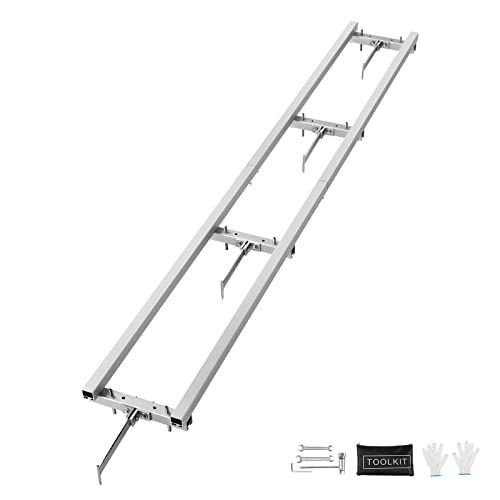
- 9 ft rail guide with four cross-beams
- Aluminum and iron build for durability
- Adjustable plates fit different log sizes
Best For: Builders and woodworkers needing a stable first-cut guide
All-in-One Starter Kit

- Bundle includes mill and 9 ft rail guide
- Rails can combine into 9 ft or 6 ft setups
- Fits 14" to 36" guide bars
Best For: Home users who want a bundled milling and rail kit
Simple First-Cut Rail
9 FT Guide System with 3 Crossbars

- Creates a straight, level first cut
- Aircraft-grade aluminum construction
- Connector kit links 9 ft or 5 ft sections
Best For: Users needing a simple rail base for first-pass cutting
Stable rail-guided milling
VEVOR 14"-36" Chainsaw Mill and 9ft Rail Guide

- 14"-36" mill with 9 ft rail guide
- Anti-loosening hardware and stable positioning holes
- Galvanized steel plus aluminum/iron construction
Best For: Woodworkers wanting a steadier rail-guided mill for accurate lumber cuts
Rail guide only upgrade
9 Ft Rail Mill Guide System with 3 Crossbar Kits

- 9 ft aluminum rail guide for straighter first cuts
- Three crossbar kits and four cross members
- Lightweight 14.02 lb rail guide only
Best For: Buyers who need a rail extension accessory rather than a full mill
Wide-slab milling bundle
36" Chainsaw Mill with 9Ft Rail Guide
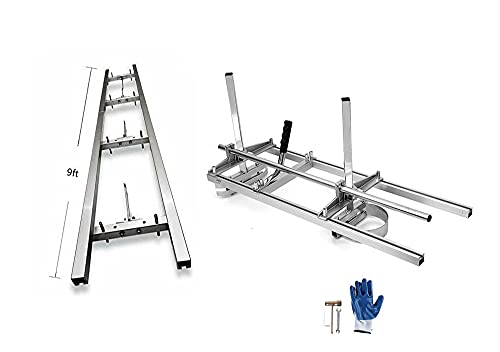
- Includes 36" mill plus 9 ft rail guide
- Handles slabs up to 36" wide and 11.81" thick
- Built for straight, level first cuts
Best For: Users working on wider slabs who want a more complete milling bundle
Heavy-Duty Extended Rail Pick – 15 ft 6 Crossbar Chainsaw Mill Kits
If you want a chainsaw mill with extension rails that gives you more working length for larger logs, this 15 ft VEVOR rail system is built for that kind of job. The adjustable crossbars make it easier to match different log sizes, while the aluminum rail construction is meant to stay steady during horizontal cuts.
Best For: Builders and woodworkers who need a longer rail setup for milling bigger logs with a chainsaw.
Pros:
- 15 ft guide rail supports longer milling runs.
- Movable crossbars help secure different log sizes.
- 6 reinforced crossbars and locknuts add stability.
- Includes 4 anti-binding wedges to help reduce jamming.
Cons:
- Longer setup may be more cumbersome to move around.
- Best suited to users who need extended rail capacity.
This is a practical pick if your priority is reach and stability rather than maximum portability. It fits most electric chainsaws and milling attachments, making it a flexible option for home or field milling.
Portable Field Milling Pick – 12FT Rail Mill Guide System
This chainsaw mill with extension rails is aimed at users who want a simpler, portable setup for cutting rough logs into slabs. The 12 ft rail system uses aluminum profiles, bolt-connected rails, and leveling bolts to help stabilize the track during milling.
Best For: Homeowners and outdoor users who want a portable 12 ft milling rail for field work or home lumber projects.
Pros:
- 12 ft rail length is practical for first-tier log cuts.
- Aluminum profiles keep the system lighter for transport.
- Bolt-connected rails are easy to install and disassemble.
- Leveling bolts and steel-nail beams help stabilize the track.
Cons:
- Designed for the first tier of logs, so it is more specialized.
- Shorter than 15 ft systems for very long cuts.
If portability matters, this 12 ft guide system is a straightforward option. It is positioned as a good fit for outdoor forest operations and general lumber milling at home or in the woods.
Balanced Mid-Length Rail Pick – 12 ft 4 Crossbar Chainsaw Mill Kits
For buyers comparing a chainsaw mill with extension rails, this 12 ft VEVOR setup offers a more compact alternative to the longer version while keeping the same adjustable guide-rail concept. The movable crossbars, aluminum build, and included wedges are all aimed at steady, accurate cutting.
Best For: Builders and woodworkers who want a 12 ft rail mill with adjustable support and a lighter overall setup.
Pros:
- 12 ft guide rail works well for many milling projects.
- Movable crossbars adjust to different log sizes.
- 4 reinforced crossbars add structural stability.
- Includes 2 anti-binding wedges for smoother cutting.
Cons:
- Shorter than the 15 ft version if you need more reach.
- Only includes 2 wedges, fewer than the longer model.
This is a sensible middle-ground choice if you want the VEVOR style of adjustable rail milling without the extra bulk of a 15 ft system. It should suit home projects and field milling where moderate length is enough.
Compact Portable Rail Pick – 9FT Rail Mill Guide System
If you need a chainsaw mill with extension rails for smaller or more portable setups, this 9 ft guide system is the most compact option in the group. It uses aluminum profiles, bolt-connected rails, and leveling bolts to help support straight, controlled cuts on rough logs.
Best For: Homeowners, carpenters, and woodworkers who want a compact 9 ft milling rail for easier transport.
Pros:
- 9 ft length is easier to carry and handle.
- Aluminum profiles keep the system portable.
- Bolted rail sections are easy to assemble and remove.
- Leveling bolts help stabilize the track during use.
Cons:
- Shortest rail length here, so it offers less reach.
- Best for users who do not need extended milling capacity.
This model makes sense when portability comes first and your milling tasks are more modest. It is designed to help convert rough logs into slabs at home or in the woods without a heavy rail setup.
Heavy-Duty Rail Guide – VEVOR 9 ft Adjustable Mill Guide
If you need a chainsaw mill with extension rails that feels stable and easy to set up, this VEVOR rail mill guide is built around a reinforced 9 ft layout with four cross-beams and adjustable fixed plates. It is designed to help keep the first cut level while staying compatible with a wide range of chainsaws and chainsaw mills.
Best For: Builders and woodworkers who want a sturdy, adjustable rail guide for making straight first cuts on logs.
Pros:
- 9 ft guide system with four cross-beams for added reinforcement and smoother sliding.
- Aluminum and iron construction is wear-resistant, rust-resistant, and relatively lightweight.
- Adjustable fixed plates help secure different log sizes for more controlled horizontal cuts.
- Includes an accessories storage bag for easier transport and organization.
Cons:
- Requires assembly before use.
- Designed as a guide system, so it must be paired with a chainsaw mill or chainsaw setup.
This is a practical pick if your priority is a reinforced rail guide that can support stable milling and flexible log positioning. It focuses on the setup and first-cut alignment rather than extra cutting features.
All-in-One Starter Kit – 36-Inch Mill + 9FT Rail Guide
This chainsaw mill with extension rails bundle combines a 36-inch portable mill with a 9 ft rail guide system, so you can set a straight datum for the first layer of a log. It is aimed at users who want one package that covers both the milling frame and the alignment rails.
Best For: Homeowners, woodworkers, and carpenters who want a bundled mill and rail setup for slab cutting.
Pros:
- Includes both a 36-inch portable chainsaw mill and a 9 ft rail guide system.
- Rail lengths can be combined into 9-foot or 6-foot track configurations.
- Made from aluminum profiles and galvanized steel for a lightweight, rust-resistant build.
- Designed to help convert rough logs into slabs at home or in the woods.
Cons:
- Heavier package than a rail-only setup at 33.3 pounds.
- Only fits guide bars from 14″ to 36″, so compatibility is limited to that range.
This bundle makes sense if you want a single purchase that includes the mill and the supporting rails. It is especially useful for first-pass cutting where the rail guide sets the reference line.
Simple First-Cut Rail – 9 FT Guide System with 3 Crossbars
For anyone looking for a straightforward chainsaw mill with extension rails, this 9 ft rail guide system is built to create a straight, level first cut along a log. Its aircraft-grade aluminum construction and connector kit make it a practical rail foundation for log milling setups.
Best For: Users who want a basic 9-foot rail system to establish a clean first cut.
Pros:
- 9 ft guide system is designed to help create a straight and level first cut.
- Aircraft-grade aluminum construction keeps the rail lightweight.
- Connector kit supports combining any 9 ft or 5 ft guide system sections together.
Cons:
- Assembly instructions should be read carefully before installation.
- This is a rail guide only, so it still needs a saw mill or chainsaw frame setup.
This is a clean, no-frills option if your main goal is reliable log alignment for the first pass. The connector system adds flexibility if you want to expand or reconfigure the rail layout later.
Stable rail-guided milling – VEVOR 14"-36" Chainsaw Mill and 9ft Rail Guide
If you want a chainsaw mill with extension rails for more controlled slab cutting, this VEVOR setup pairs a 14″-36″ mill with a 9 ft aluminum rail guide. The system is built for stable, straight first cuts, and the rail’s adjustable plates help secure logs for more accurate milling. It’s a practical choice for woodworkers who want portability without giving up steadiness.
Best For: Woodworkers and carpenters who want a stable rail-guided setup for cutting lumber and slabs with better precision.
Pros:
- Robust frame uses anti-loosening nuts and large washers for added stability.
- Air gun-carved scales and chainsaw positioning holes support more precise cuts.
- Galvanized steel, aluminum, and iron construction is made for durability and corrosion resistance.
- Adjustable fixed plates help fit different log sizes.
Cons:
- Heavier than a basic mill-only setup at 26.5 pounds.
- Requires a compatible chainsaw to use the rail guide system effectively.
This is a well-rounded option if your priority is steadier milling and accurate slab thickness. The 9 ft rail guide adds the control needed for cleaner cutting, while the overall build is aimed at long-term use in the shop or on-site.
Rail guide only upgrade – 9 Ft Rail Mill Guide System with 3 Crossbar Kits
Carmyra Rail Mill Guide System 9 Ft, 3 Crossbar Kits Work with Chainsaw Mill (9 FT)
Check Price On AmazonThis chainsaw mill with extension rails is a straightforward way to improve the first cut on longer logs. The 9 ft aluminum rail guide is designed for smooth sliding with a saw mill, while the crossbar layout adds support and helps keep the setup level. If you already have a compatible mill and just need a longer guide, this is a focused accessory-style option.
Best For: Users who already own a compatible saw mill and need a lightweight 9 ft rail guide for straighter first cuts.
Pros:
- 9 ft rail system helps create a straight, level first cut.
- Aircraft-grade aluminum keeps the guide lightweight at 14.02 pounds.
- Three crossbar kits and four cross members add stability.
- Can be combined with more than one rail guide for longer logs.
Cons:
- This is the rail guide only, not a full chainsaw mill kit.
- Designed to work with saw mill dimensions, so compatibility matters.
For buyers who mainly need the extension-rail portion of a milling setup, this guide keeps things simple and portable. Its strength is in helping establish a cleaner reference cut before you move on to the rest of the milling work.
Wide-slab milling bundle – 36" Chainsaw Mill with 9Ft Rail Guide
If you’re shopping for a chainsaw mill with extension rails that can handle larger slabs, this bundle combines a 36″ mill with a 9 ft rail guide system. The rail helps establish a straight and level first cut, and the mill is sized for boards from 0.2″ to 11.81″ thick and up to 36″ wide. It’s a practical pick for woodworking and construction jobs where wider logs are part of the plan.
Best For: Woodworkers and builders who need a 36″ milling setup with a 9 ft rail for wider lumber projects.
Pros:
- Includes both a 36″ chainsaw mill and a 9 ft rail guide system.
- Supports slabs up to 36″ wide and 11.81″ thick.
- Designed to make a straight, level first cut along a log.
- Built from high-quality materials for sturdier long-term use.
Cons:
- Heavier than a rail-only guide at 13.77 kilograms.
- Requires a gasoline-powered chainsaw setup.
This bundle makes sense if you want a more complete milling solution rather than just a rail accessory. The combination of wider mill capacity and the 9 ft guide gives you a useful starting point for slab work on larger logs.
How We Picked the Best Chainsaw Mill with Extension Rails
We prioritized rail length, crossbar support, build quality, compatibility with common chainsaw guide bars, and how practical each kit is for real-world milling. Systems that offer adjustable sections, sturdy aluminum construction, and clear mounting support ranked higher because they are easier to align and more useful on uneven logs.
We also looked for options that make it simpler to scale from shorter cuts to longer passes without buying a completely new setup.
Quick Comparison
Shorter rail kits are usually better for portable jobs, small slabs, and occasional use. Mid-length kits are a more flexible choice for most property owners because they balance transportability with cut length. Longer extension-rail systems are the better fit when you want to mill larger logs, reduce repositioning, or work on bigger slabs and beams.
Key Buying Factors for a Chainsaw Mill with Extension Rails
Rail Length and Expandability
Choose rail length based on the largest log or slab you realistically plan to cut. If you expect to grow into larger projects, extension-friendly rails are worth paying for up front.
Crossbar Count and Stability
More crossbars typically help the guide stay aligned across uneven material. That can improve cut consistency, especially on longer rails where flex becomes more noticeable.
Material and Build
Aluminum rails are popular because they are light enough to move around but still rigid enough for milling. Check for solid connectors, secure clamps, and hardware that won’t loosen quickly during repeated use.
Chainsaw Compatibility
Make sure the system matches your guide bar length and saw size. A rails setup is only useful if your chainsaw can safely power the cut and physically fit the mill range.
Portability Vs. Capacity
If you move between job sites or mill in remote areas, a lighter, modular setup may be the best choice. If you stay in one place and cut larger stock, capacity and rigidity should matter more than compact storage.
Who Should Buy Which Chainsaw Mill with Extension Rails?
Buy a shorter rail kit if you mostly handle small logs, trim stock, or need a more portable solution. Choose a mid-range Chainsaw Mill with Extension Rails if you want the best all-around balance for property maintenance, hobby milling, and occasional slab work. Go with the longest, most expandable setup if your priority is milling larger diameter logs, wider live-edge slabs, or longer beams with fewer resets.
In general, the best option is the one that matches your largest likely cut, your saw’s capacity, and how often you plan to move the system. That combination matters more than chasing the longest rail on paper.