If you want clean veneer cuts, bookmatched panels, or thick lumber broken down with less waste, the right saw matters. The best band saws for resawing combine frame rigidity, blade control, enough depth of cut, and steady power.
This roundup focuses on models that can handle demanding resaw work without unnecessary guesswork, so you can match the saw to your shop size, budget, and material thickness.
Best 10 Band Saws for Resawing Picks for 2026
Heavy-Duty Resaw Capacity

- 13-inch resaw capacity for thick stock
- Supports blades from 1/8 inch to 3/4 inch
- Includes resaw fence and cast-iron table
Best For: Woodworkers needing a dedicated resaw saw for thick panels and veneer
Classic Shop Resaw Setup
Powermatic 14-Inch Woodworking Bandsaw

- 4-inch resaw attachment on the rip fence
- Quick-tension lever speeds blade changes
- Dual bearing guides and low-vibration wheels
Best For: Woodworkers who value smooth control and a resaw-ready fence
Budget-Friendly Two-Speed Option
WEN 14-Inch Band Saw with Stand

- Two speeds for flexible cutting
- Includes fence, gauge, miter gauge, and light
- 8.85-inch cut depth suits lighter resaw work
Best For: Hobbyists wanting an affordable, accessory-rich 14-inch saw
Maximum Shop Resaw Capacity
RIKON 10-1414 14-Inch Deluxe Bandsaw

- 14-inch resaw capacity for taller stock
- Dual speeds at 1,476 or 3,280 ft/min
- Quick-adjust fence and tool-less blade guides
Best For: Serious woodworkers who need the most resaw height
Shop-Rigged Mid-Size Resaw Pick
JET 14-Inch Woodworking Band Saw

- 6-inch resaw capacity for larger stock
- Cast iron frame and balanced wheels add rigidity
- Single-knob tracking and micro-adjustable guides simplify setup
Best For: Woodworkers needing a sturdy 14-inch saw for regular resawing
Compact Precision Resaw Pick

- 1-HP induction motor with dual speeds
- 6-inch resaw capacity in a compact footprint
- Tool-less micro-adjustable guides and LED light
Best For: Small-shop woodworkers wanting accurate resawing in less space
Budget Benchtop Starter Pick

- Compact benchtop saw with 2.8-amp motor
- 3-1/2-inch cutting depth for light work
- Includes rip fence, miter gauge, and dust port
Best For: Beginners needing a small, affordable saw for light resawing
Premium 15-Inch Resawing Pick
JET 15-Inch Woodworking Bandsaw, 1-3/4 HP
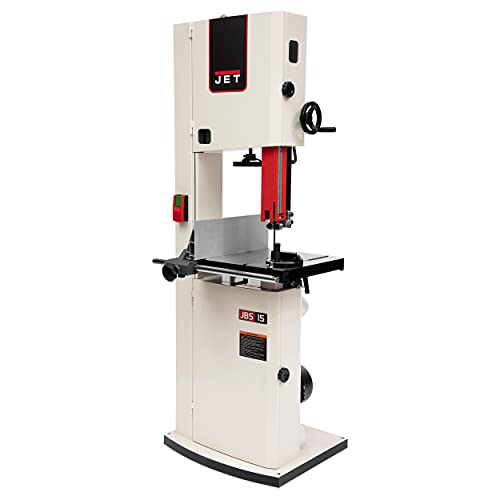
- Large resaw capacity for veneers and book-matching
- Precision-ground cast-iron table adds stability
- Micro-adjustable fence and toolless guides
Best For: Woodworkers wanting a stable, high-capacity resawing bandsaw
Dual-Speed Value Resawing Option
14-Inch Dual-Speed Bandsaw for Woodworking

- Two speed settings for hardwoods and softwoods
- Up to 13-inch cutting height
- Cast iron table with overload protection
Best For: Hobbyists and small-shop users who need flexible resawing
High-Capacity Shop Resawing Choice
JET 18" Woodworking Band Saw, 1.75 HP

- 16-inch resaw height for taller stock
- Toolless guides and quick-release tensioning
- Dual 4-inch dust ports and foot brake
Best For: Shops needing maximum resaw height and fast adjustments
Heavy-Duty Resaw Capacity – JET 14" Woodworking Band Saw
If you’re comparing band saws for resawing, the JET 14-inch model stands out for its 13-inch resaw capacity and 3/4-inch blade support, making it a strong fit for slicing thick stock into bookmatched panels or veneer. It’s built around a 1.75 HP motor, 14-inch wheels, and a machined-aluminum resaw fence for controlled, repeatable cuts.
Best For: Woodworkers who need a serious resaw machine for thick hardwood, softwood, or board stock.
Pros:
- 13-inch resaw capacity handles thick material in one pass.
- Runs blades from 1/8 inch to 3/4 inch for both scroll work and resawing.
- Includes a machined-aluminum resaw fence with easy-read scale.
- Ground cast-iron table and adjustable ball-bearing guides support precise work.
Cons:
- Blade is sold separately.
- Large 272-pound footprint may be better suited to a dedicated shop space.
For buyers who want one of the more capable band saws for resawing in a home or small production shop, this JET model is built around capacity and control. The 5-year warranty and included stand add value, but its size and weight make it a more permanent setup than a portable tool.
Classic Shop Resaw Setup – Powermatic 14-Inch Woodworking Bandsaw
For woodworkers shopping band saws for resawing, the Powermatic 14-inch bandsaw focuses on smoother blade control and easier setup. Its 4-inch resaw attachment, dual bearing blade guides, and quick-tension lever are aimed at repeatable cuts and faster blade changes in the shop.
Best For: Shop users who want a refined 14-inch bandsaw with resaw-focused fence support.
Pros:
- Includes a 4-inch resaw attachment on the rip fence.
- Quick-tension lever helps speed blade changes and detensioning.
- Dual bearing blade guides offer close control above and below the table.
- Precision-balanced cast iron wheels are designed to reduce vibration.
Cons:
- Resaw attachment is 4 inches, so it is less specialized than larger-capacity resaw machines.
- Lamp bulb is not included.
This Powermatic is a practical pick if you want a capable shop bandsaw with resaw support and a strong focus on smooth operation. It does not emphasize maximum resaw height, but its fence, guides, and tensioning features make it a solid choice for controlled woodworking cuts.
Budget-Friendly Two-Speed Option – WEN 14-Inch Band Saw with Stand
If you’re looking at band saws for resawing on a tighter budget, the WEN BA1487 offers a two-speed setup and a 9.5-amp motor in a 14-inch frame. It will not match the deepest-cut machines here, but it does provide a 1/2-inch blade, a fence, and a large tilting table for general woodworking and lighter resaw tasks.
Best For: Hobbyists who want a versatile 14-inch bandsaw with useful accessories included.
Pros:
- Two speeds of 1480 or 3280 FPM add flexibility for different cuts.
- Includes a fence, miter gauge, blade tension gauge, and work light.
- Uses blades from 1/8 inch to 1 inch wide.
- Spacious table bevels up to 45 degrees.
Cons:
- 8.85-inch maximum cut depth is lower than dedicated resaw machines.
- Less resaw capacity than the more premium 14-inch options in this roundup.
The WEN BA1487 makes sense if you want a well-equipped bandsaw with some resaw capability without paying for a heavier-duty saw. It is better suited to mixed-use shop work than to frequent thick-stock resawing.
Maximum Shop Resaw Capacity – RIKON 10-1414 14-Inch Deluxe Bandsaw
Among band saws for resawing, the RIKON 10-1414 is built to handle taller stock with a 14-inch resaw capacity and dual blade speeds. Its quick-adjust drift fence, tool-less blade guides, and SP-coated cast iron table are aimed at giving you more control when cutting thick hardwood or large panels.
Best For: Serious woodworkers who want the largest resaw capacity in this group.
Pros:
- 14-inch resaw capacity handles very tall stock.
- Dual blade speeds of 1,476 or 3,280 ft/min add flexibility.
- Quick-adjust drift fence with micro-adjustment supports accurate tracking.
- Spring-loaded tool-less blade guides and dual dust ports improve convenience.
Cons:
- Larger cabinet-style saw may take more space than compact 14-inch models.
- Blade is listed as regular blade rather than a premium included resaw blade.
If resaw height is your top priority, this RIKON offers the most capacity in the lineup and pairs it with practical setup features. It is a strong shop machine for users who want to process thick stock more confidently and with less fuss.
Shop-Rigged Mid-Size Resaw Pick – JET 14-Inch Woodworking Band Saw
If you want a dependable option among band saws for resawing, this JET 14-inch model gives you a 6-inch resaw capacity, a rigid cast iron frame, and balanced wheels designed to help keep cuts steady. It’s a practical choice for woodworkers who need solid performance on larger stock without jumping to a much bigger machine.
Best For: Woodworkers who want a sturdy 14-inch band saw for regular resawing and accurate blade control.
Pros:
- 6-inch resaw capacity for cutting larger pieces of wood
- Upper and lower cast iron frame adds strength and rigidity
- Single-knob tracking adjustment simplifies blade setup
- Micro-adjustable lower blade guide helps reduce setup time
Cons:
- Uses a corded 115V setup, so placement depends on shop power
- Not as compact as benchtop saws for very small spaces
- Included blade may not suit every resawing preference
This JET balances size, stability, and setup convenience well for resaw-focused woodworking. The lower-friction guides and precision-balanced wheels should help it feel consistent during longer cuts, which is exactly what many buyers want from band saws for resawing.
Compact Precision Resaw Pick – Laguna V:10 10-Inch Bandsaw
This Laguna V:10 is built for woodworkers who want a compact machine with strong control for band saws for resawing. It combines a 1-HP induction motor, 6-inch resaw capacity, and tool-less micro-adjustable roller-bearing guides to make setup and cutting feel more controlled in a smaller workshop.
Best For: Small-shop woodworkers who want accurate resawing with compact footprint and modern convenience features.
Pros:
- 1-HP induction motor with dual blade speeds for versatile cutting
- 6-inch resaw capacity and 9-5/8-inch throat capacity
- Tool-less micro-adjustable blade guides support precise setup
- Dust collection, LED light, and quick-release tension lever add convenience
Cons:
- 10-inch frame is smaller than a full-size 14-inch saw
- Compact table size may feel limiting for larger workpieces
- Shorter footprint may not suit users wanting maximum mass and table area
The V:10 stands out if you need resaw capability without giving up too much floor space. Its mix of cast iron wheels, tracking windows, and integrated lighting makes it a well-equipped choice for careful, repeatable work.
Budget Benchtop Starter Pick – WEN 9-Inch Band Saw
For shoppers comparing entry-level band saws for resawing, this WEN benchtop model offers a simple way to handle smaller woodworking cuts. Its 2.8-amp motor, 3-1/2-inch cutting depth, and included fence and miter gauge make it a straightforward option for light-duty shop tasks.
Best For: Beginners or budget-minded buyers who need a compact saw for light resawing and general small-shop cutting.
Pros:
- Compact benchtop design fits smaller workshops
- Includes rip fence and miter gauge for guided cuts
- Spacious tilting table bevels up to 45 degrees
- 2-1/2-inch dust port helps with cleanup
Cons:
- 3-1/2-inch cutting depth is limited for serious resawing
- 2.8-amp motor is less powerful than larger shop saws
- Best suited to smaller stock rather than wide boards
This WEN is the most compact option here, so it makes sense for light-duty work and tighter spaces. It won’t match the resaw capacity of larger machines, but it does provide the basic features needed to get started.
Premium 15-Inch Resawing Pick – JET 15-Inch Woodworking Bandsaw, 1-3/4 HP
If you’re comparing band saws for resawing, this JET 15-inch model stands out for its large resaw capacity, stable cast-iron table, and fence system built for controlled cuts. It is aimed at woodworkers who want to slice veneers, open up thick stock, and make book-matched panels with a machine that feels solid under pressure.
Best For: Woodworkers who want a heavy-duty resawing saw with strong stability and fine adjustment features.
Pros:
- Large resaw capacity supports veneers, book-matching, and thick stock work.
- Precision-ground cast-iron table adds stability and work support.
- Micro-adjustable, dual-position fence side plate helps dial in cuts.
- Toolless upper and lower ball bearing guides simplify setup.
Cons:
- Large, heavy machine at 382 pounds, so placement is not casual.
- Designed for serious woodworking spaces rather than light-duty use.
This is a strong choice if your priority is resawing performance with shop-friendly adjustment features. The cast-iron construction and rigid guide system should appeal to users who want consistency on larger cuts.
Dual-Speed Value Resawing Option – 14-Inch Dual-Speed Bandsaw for Woodworking
For shoppers looking at band saws for resawing on a tighter budget, this 14-inch dual-speed model offers useful flexibility for both hardwood and softwood work. Its 2 HP motor, cast iron table, and tall cutting height make it a practical fit for woodworkers who want solid capacity without moving up to a larger 18-inch machine.
Best For: Hobbyists and small-shop users who want dual-speed control for varied resawing tasks.
Pros:
- Dual speed settings help match the cut to hardwoods or softwoods.
- Up to 13-inch cutting height supports a range of resawing jobs.
- Cast iron table tilts right 45° and left 5° for flexible work.
- Overload protection adds a safety and durability benefit.
Cons:
- Smaller resaw height than the larger 16-inch-capacity model in this roundup.
- Included as a bare tool, so accessories are limited from the start.
This saw makes sense if you want adjustable speed and respectable capacity for everyday woodworking. It should be especially appealing when you need one machine to handle different wood types without complicating the setup.
High-Capacity Shop Resawing Choice – JET 18" Woodworking Band Saw, 1.75 HP
If your shortlist of band saws for resawing includes larger stock and frequent setup changes, this JET 18-inch model is built for that kind of work. It offers a 16-inch resaw height, 18-inch throat, toolless adjustments, and dual dust ports, giving small-production shops a serious cutting platform for hardwood, softwood, and manufactured board.
Best For: Shops that need maximum resaw height and quick setup features in a woodworking bandsaw.
Pros:
- 16-inch resaw height handles taller stock in one pass.
- 18-inch throat and 150-inch blade length support larger workpieces.
- Toolless upper and lower guides make adjustments faster.
- Foot brake adds controlled stopping, and dual dust ports help cleanup.
Cons:
- Blade is sold separately, so you will need to factor that in.
- Large footprint and 383-pound weight require committed shop space.
For resawing-focused buyers, this model offers the most headroom and the most shop-oriented feature set of the group. It is a strong fit when capacity, dust control, and fast adjustment matter more than compact size.
How We Picked These Band Saws for Resawing
We looked for saws that offer the most practical mix of resaw height, motor strength, wheel size, fence support, and overall stability. For Band Saws for Resawing, consistent blade tracking and a rigid frame matter just as much as horsepower. We also considered whether each saw makes sense for a small shop, a mid-size woodworking setup, or a heavier production environment.
Quick Comparison
In general, smaller benchtop and 10-inch models fit light-duty work, occasional thin stock ripping, and tighter spaces. Fourteen-inch class saws are the sweet spot for many woodworkers because they balance footprint, capability, and accessory support. Larger 15-inch and 18-inch machines are better when you want more resaw capacity, more motor reserve, and better performance on thicker hardwoods.
Key Buying Factors for Band Saws for Resawing
Resaw Height
Check the maximum cutting height first. If you plan to slice boards into veneer or handle wider live-edge stock, choose a saw with enough clearance to do the job comfortably.
Motor Power and Speed
More power helps the blade stay on pace through dense wood, especially when paired with a quality resaw blade. Two-speed operation can be useful if you switch between delicate cuts and more aggressive stock removal.
Frame Rigidity and Table Stability
A solid frame reduces vibration, which improves cut quality. Cast iron tables and heavier stands also help keep the setup steady during long cuts.
Blade Support and Fence Quality
Good guides, easy tracking adjustments, and a straight, repeatable fence are essential. Without them, even a strong saw can wander during a resaw pass.
Blade Selection
The saw is only part of the setup. For best results, use a dedicated resaw blade that matches the machine’s width limits and your target cut quality.
Who Should Buy Which Band Saws for Resawing?
If you’re a hobbyist or have limited space, a compact benchtop or 10-inch saw may be enough for lighter projects. If you want the best all-around value, a 14-inch model is usually the most practical choice among Band Saws for Resawing. If you regularly work with thick hardwood, wide boards, or production-level volume, step up to a 15-inch or 18-inch saw for added stability and capacity.
For most buyers, the right decision comes down to how often you resaw, how thick your stock is, and how much room you have in the shop. Match those needs first, and you’ll end up with a saw that feels capable instead of compromised.