If you want smooth arcs, tight radii, and cleaner control than a jigsaw can deliver, the right band saw makes a big difference.
We narrowed the field to 10 band saws for curved cuts across benchtop, contractor-style, and portable options so you can match capacity, power, and budget to your projects.
Best 10 Band Saws for Curved Cuts Picks for 2026
Shop-Grade Resawing
JET 14" Woodworking Band Saw, 1.75 HP

- 1/8" to 3/4" blade range supports curved cuts and resawing.
- 13" resaw capacity and 1.75 HP motor handle thick stock.
- Heavy cast-iron build with tilting table for steady cuts.
Best For: Woodworkers who want one saw for precise curves and resawing.
Compact Curve Cutter
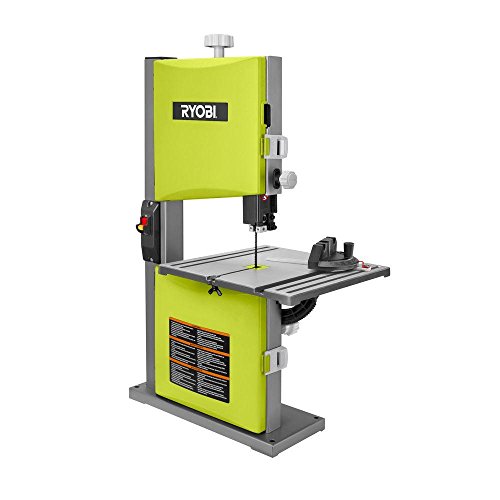
- Compact 9" saw fits small shops and garages.
- 45-degree cutting angle supports angled cuts.
- Light 37.3-pound frame is easier to move.
Best For: Hobby users who want a small bandsaw for simple curved cuts.
Two-Speed Workshop Choice

- Two speeds help match different cutting tasks.
- Accepts 1/8" to 1" blades for versatility.
- Includes circle guide, fence, miter gauge, and work light.
Best For: Woodworkers who want a versatile bandsaw with speed options and accessories.
Small-Shop Curve Cutter

- 8-inch throat is suited to curves and small parts.
- 0-45 degree table tilt supports bevel cuts.
- Includes rip fence, miter gauge, and dust port.
Best For: DIY users and hobby woodworkers who need a compact saw for curves.
Versatile Shop Band Saw
WEN BA3962 10-Inch Two-Speed Band Saw with Stand
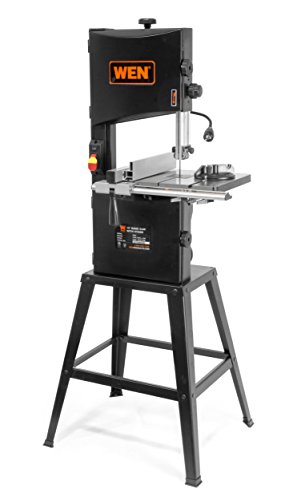
- Two-speed operation at 1520 or 2620 FPM
- Cuts up to 6 inches deep and 9-3/4 inches wide
- Includes stand, work light, fence, and miter gauge
Best For: Woodworkers wanting a budget-friendly floor saw for curved cuts
Portable Cordless Deep-Cut Option
DEWALT DCS374B 20V MAX Portable Band Saw
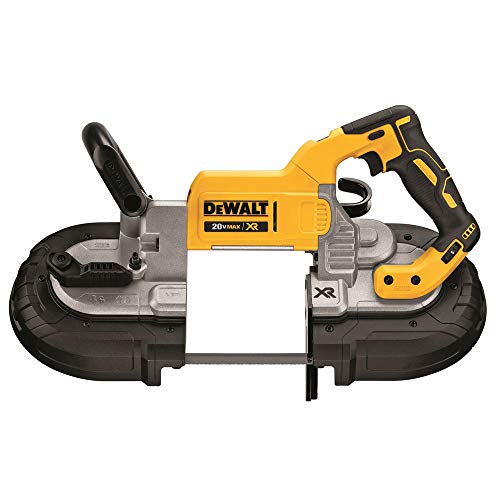
- Cordless design for jobsite portability
- 5-inch cutting capacity with variable speed
- LED work light and tool-free blade changes
Best For: Tradespeople needing a portable deep-cut saw for on-site work
Heavy-Duty Shop Pick
VEVOR 13.39-Inch Benchtop Bandsaw

- 13-inch max cutting height
- Variable speed: 440 to 846 RPM
- 0-45° tilting table with work light
Best For: Large shop projects and curved cuts in mixed materials
Compact Budget Pick

- 9-inch width and 3-1/2-inch depth
- Blade speed up to 2500 feet per minute
- Includes fence, miter gauge, and dust port
Best For: Small shops needing an affordable curved-cut saw
Curve-Friendly Value Pick
WOODSKIL 9-Inch Benchtop Bandsaw
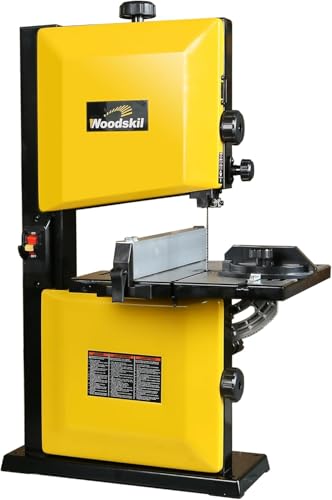
- 2500 FPM blade speed
- Table tilts 0-45° with miter gauge
- Steel base adds stability
Best For: Versatile small-shop curved cuts and angled woodworking
Shop-Grade Resawing – JET 14" Woodworking Band Saw, 1.75 HP
If you’re comparing band saws for curved cuts, this JET model is also built to handle much more than simple scroll work. Its 1/8" to 3/4" blade range, 13-1/2" throat, and adjustable blade guides give you the control needed for tight curves, while the 13" resaw capacity makes it a strong choice for thicker stock too.
Best For: Woodworkers who want one saw for precise curves, resawing, and general shop work.
Pros:
- Runs 116" blades from 1/8" to 3/4", so it can handle tight curved cuts and wider resaw blades.
- 13" resaw capacity and a 1.75 HP motor support thick stock cutting.
- Ground cast-iron table tilts 0-45° right for bevel work.
- Includes a machined-aluminum resaw fence and dual dust ports.
Cons:
- Blade is sold separately, so it’s not ready for cutting right out of the box.
- At 272 pounds, it’s a heavy machine that needs dedicated shop space.
Overall, this is a serious woodworking band saw for buyers who want curved-cut precision without giving up resaw capability. It’s better suited to a permanent shop than a portable setup, but the added mass and capacity help it feel stable and capable.
Compact Curve Cutter – Ryobi BS904G 9" Bandsaw
The Ryobi BS904G is a compact option for buyers shopping band saws for curved cuts in a small workshop or garage. Its 9" size, 62" blade length, and 45-degree cutting angle make it suitable for lighter curved work and basic bevel cuts without taking up much room.
Best For: Hobby users who want a small, lightweight bandsaw for simple curved cuts.
Pros:
- Compact 9" size fits easily in smaller spaces.
- 45-degree cutting angle supports angled work.
- At 37.3 pounds, it’s far easier to move than larger floor models.
- Corded electric power keeps it ready for workshop use.
Cons:
- Smaller capacity makes it less suitable for large workpieces.
- Product details provided do not list the kind of curve-cutting features found on larger woodworking saws.
This is a practical entry-level pick if your priority is saving space and handling occasional curved cuts. It’s not built for heavy resawing, but its compact footprint makes it a convenient fit for light-duty tasks.
Two-Speed Workshop Choice – WEN BA1487 14-Inch Band Saw
For shoppers looking at band saws for curved cuts, the WEN BA1487 stands out because it pairs a two-speed setup with a large table and a usable blade range. It accepts 1/8" to 1" blades and includes a 1/2" blade, so it can be set up for both finer curved work and more aggressive cutting tasks.
Best For: Woodworkers who want a versatile bandsaw with speed options and included accessories.
Pros:
- Two speeds, 1480 or 3280 FPM, give you flexibility for different materials and cuts.
- Accepts 1/8" to 1" blades for a wide range of cutting tasks.
- Includes a circle cutting guide, fence, miter gauge, and blade tension gauge.
- Spacious 21-1/2 x 15-3/4-inch table bevels up to 45 degrees.
Cons:
- At 138.9 pounds, it is not a lightweight saw.
- The included blade is 1/2", so very tight curves may require a narrower blade purchase.
As a shop bandsaw, this model offers a balanced mix of control and convenience. The extra accessories and speed choices make it a practical option if you want one machine that can grow with different cutting jobs.
Small-Shop Curve Cutter – 8-Inch Benchtop Bandsaw
If you need band saws for curved cuts in a small workshop, this benchtop model is built around compact control. The 8-inch throat, 0-45 degree tilting table, rip fence, and miter gauge make it useful for straight lines, curves, and repeatable angled cuts without taking up much bench space.
Best For: DIY users and hobby woodworkers who need a compact saw for curves and small parts.
Pros:
- 8-inch throat gives room for curved cuts and small projects.
- 0-45 degree tilting table supports beveled edges.
- Includes rip fence and miter gauge for controlled cuts.
- 2-inch dust port and dust brush help keep the work area cleaner.
Cons:
- 3-amp motor is best suited to light-duty workshop use.
- Benchtop size limits capacity compared with larger floor-standing saws.
This is a practical choice if space matters more than maximum cutting depth. It offers the core features needed for hobby woodworking and small parts work, with enough support features to make curved cutting easier to manage.
Heavy-Duty Metal Mitering Choice – KAKA INDUSTRIAL BS-108G 10 x 7.9 in Mitering Band Saw
If you need band saws for curved cuts in a metal shop, the KAKA INDUSTRIAL BS-108G is built more for controlled angle work and repeatable stock cutting than for hobby use. Its mitering head swivels from 0 to 60 degrees, and the hydraulic downfeed plus auto shut-off help keep cuts steady when working through pipe, tubing, bar stock, and other fabrication materials.
Best For: Fabrication shops and metalworkers who need a robust mitering band saw for angled cuts in pipe, tubing, and stock.
Pros:
- 10 x 7.9 in rectangular capacity and up to 9 in round at 90 degrees.
- 0 to 60 degree swivel bow supports angled cuts, including 45 and 60 degree setups.
- Hydraulic downfeed and auto shut-off improve control during longer cutting jobs.
- Built-in coolant system, quick-release vise, and repeat-cut stop aid shop workflow.
Cons:
- Large 606 lb machine is not portable.
- Requires 115V single-phase power and shop-level setup.
- Freight delivery and liftgate considerations may add logistics complexity.
This is a serious metal-cutting machine for users who value capacity, control, and repeatability. If your priority is production-style mitering rather than light-duty portability, it brings the right mix of power and features.
Versatile Shop Band Saw – WEN BA3962 10-Inch Two-Speed Band Saw with Stand
For woodworkers comparing band saws for curved cuts, the WEN BA3962 offers a practical mix of size, speed options, and table control. Its 10-inch frame, two-speed operation, and 45-degree beveling table make it a flexible shop saw for shaping stock, while the included stand, work light, fence, and miter gauge add convenience for everyday cutting tasks.
Best For: Woodworkers who want an affordable, feature-packed floor-standing band saw for curved and general-purpose cuts.
Pros:
- 3.5-amp motor handles cuts up to 6 inches deep and 9-3/4 inches wide.
- Two speeds, 1520 or 2620 FPM, add versatility for different materials and tasks.
- 14-1/8 x 12-1/2 inch cast aluminum table bevels up to 45 degrees.
- Includes stand, work light, fence, miter gauge, dust port, and a 3/8-inch blade.
Cons:
- Designed for wood surfaces rather than metal cutting.
- 45-degree table bevel is useful, but not as specialized as a mitering metal saw.
- At 58.5 inches tall, it takes dedicated floor space.
This model is a strong all-around shop option if you need curved-cut capability without moving up to a more specialized industrial machine. The included accessories and two-speed setup make it easy to get started right away.
Portable Cordless Deep-Cut Option – DEWALT DCS374B 20V MAX Portable Band Saw
If you want band saws for curved cuts in a portable format, the DEWALT DCS374B stands out for jobsite flexibility rather than bench-top capacity. Its 5-inch cutting capacity, variable speed control, LED work light, and tool-free blade changing make it a practical choice for deep cuts and tight spaces where mobility matters most.
Best For: Tradespeople who need a cordless, portable band saw for deep cuts and on-site work.
Pros:
- 5-inch cutting capacity supports deep cuts in a compact tool.
- Brushless motor and variable speed add performance and control.
- LED work light with 20-second delay helps in dark work areas.
- Integrated hang hook and tool-less blade change improve jobsite convenience.
Cons:
- Bare tool only, so battery and charger are not included.
- Not intended for large stationary workpieces or shop-scale cutting.
- Designed around portability, so it lacks the capacity of larger floor models.
This is the most mobile option in the group and makes sense when the cut happens at the worksite, not in a dedicated shop. It is best viewed as a deep-cut cordless tool rather than a full-size curved-cut band saw.
Heavy-Duty Shop Pick – VEVOR 13.39-Inch Benchtop Bandsaw
If you want band saws for curved cuts with extra capacity, this VEVOR benchtop model is built for larger workpieces and mixed-material projects. Its 13-inch max cutting height, 13.39-inch throat, and variable speed range make it a flexible choice when you need more control for shaping wood, plastic, aluminum, copper, and light metal.
Best For: Woodworkers and shop users who need a high-capacity bandsaw with variable speed for curved cuts and larger stock.
Pros:
- 13-inch max cutting height and 13.39-inch throat for bigger workpieces
- Continuously variable speed from 440 to 846 RPM for different materials
- 1-1/2HP 1100W motor with overheat protection
- 0-45° tilting table and included work light for more versatile cuts
Cons:
- Heavy 180.3-pound machine is less portable than smaller benchtop saws
- Larger footprint may be more than casual hobby shops need
Overall, this is the most capability-focused option in the group, especially if your curved cuts come from larger boards or a mix of materials. The variable speed and wide table adjustment add useful control, while the size makes it better suited to a dedicated workshop.
Compact Budget Pick – WEN 9-Inch Benchtop Band Saw
For buyers focused on band saws for curved cuts in a compact footprint, this WEN 9-inch benchtop saw covers the basics well. It offers a 2.8-amp motor, a 3-1/2-inch cutting depth, and a 45-degree beveling table, making it a practical choice for smaller woodworking tasks and general curve work.
Best For: Small workshops and hobby users who want a straightforward benchtop bandsaw for curved cuts and light-duty woodworking.
Pros:
- Compact 9-inch design fits smaller workspaces
- 2.8-amp motor spins the blade up to 2500 feet per minute
- Table bevels up to 45 degrees for angled cuts
- Includes rip fence, miter gauge, dust port, and 2-year warranty
Cons:
- 3-1/2-inch cutting depth is modest compared with larger saws
- 9-inch width capacity limits bigger stock
This is a simple, space-saving bandsaw that makes sense if your curved cuts are mostly on smaller pieces. The included accessories add value, but the machine is best matched to light to medium woodworking rather than oversized stock.
Curve-Friendly Value Pick – WOODSKIL 9-Inch Benchtop Bandsaw
If you’re comparing band saws for curved cuts, this WOODSKIL model stands out for combining a 9-inch throat, 2500 FPM blade speed, and a cast aluminum table that tilts from 0 to 45 degrees. It’s designed for straight cuts, curves, and multi-angle work, so it fits well in a woodworking setup that needs flexibility without moving up to a larger machine.
Best For: Woodworkers who want a compact bandsaw that can handle curves, straight cuts, and angled work.
Pros:
- 2500 FPM blade speed and 1720RPM motor speed for efficient cutting
- 9-inch width and 3-1/2-inch depth suit small to medium pieces
- Cast aluminum table tilts 0-45° and includes a 120° miter gauge
- Steel base and dust port help with stability and cleanup
Cons:
- Limited cutting depth compared with larger benchtop saws
- Best suited to wood and soft metal, not heavy material work
For users who want a versatile compact saw, this WOODSKIL model is a solid middle ground. The speed, angle range, and stable base make it easy to use for everyday curve work, while the smaller size keeps it practical for home shops.
How We Picked the Best Band Saws for Curved Cuts
For this roundup, we focused on factors that matter most when cutting curves: blade stability, table support, motor strength, throat depth, and speed control. We also considered whether each saw is better suited to light hobby use, general woodworking, or heavier shop work.
Because Band Saws for Curved Cuts are only as good as their setup, we favored models that can be tuned for tracking, fence alignment, and blade changes without excessive hassle.
Quick Comparison
Benchtop models are best for occasional curve cutting, small shops, and users who value compact size. Full-size floor-standing saws generally offer better control, more cutting capacity, and a steadier platform for thicker stock or more demanding curves. Portable band saws are useful for site work and deep cuts, but they are not the first choice for precision curved woodworking.
Key Buying Factors for Band Saws for Curved Cuts
Throat Depth and Cutting Capacity
Throat depth determines how far you can cut into a board, which affects the size of curves you can handle. If you plan to work on furniture parts, larger panels, or wide patterns, choose a saw with more capacity.
Motor Power and Speed Range
More power helps the blade stay consistent through hardwoods and thicker material. Variable or two-speed designs are especially helpful when switching between fine curve work and faster straight cuts.
Blade Tracking and Table Stability
Accurate curved cuts depend on a blade that tracks properly and a table that stays rigid under pressure. Look for solid adjustments, a flat work surface, and enough mass to reduce vibration.
Blade Width Compatibility
Narrow blades are better for tight curves, while wider blades improve tracking on gentler arcs and resaw work. A versatile saw should support a range of blade widths so you can adapt to the project.
Dust Collection and Lighting
Good visibility helps you follow layout lines more precisely. Built-in lights and dust ports can make a real difference in day-to-day accuracy and cleanup.
Who Should Buy Which Band Saws for Curved Cuts?
If you are a hobbyist or working in a small shop, a benchtop model is usually the simplest way to get started with curved cuts. If you need more stability, depth, and repeatability, a larger floor model is the better long-term choice. If your priority is portability or on-site cutting, a cordless or compact portable saw makes the most sense, even if it is less ideal for delicate woodworking curves.
In short, the best Band Saws for Curved Cuts balance control, capacity, and ease of setup. Choose the lightest saw that still gives you enough depth and blade support for the projects you actually build.